Smart Grocery Shopping Habits That Help Reduce Household Waste
Smart Grocery Shopping Habits That Help Reduce Household Waste begin before you enter the store. A quick food inventory, a realistic meal plan, and a focused grocery list can prevent forgotten vegetables, duplicate pantry staples, and ambitious purchases that never become dinner. These small choices also protect your budget.
The most effective approach is not perfection. It is matching what you buy with what your household actually eats, then storing it well and using it in the right order. The ideas below show how to make food waste reduction practical, flexible, and easier to maintain from one shopping trip to the next.
Start With a Food Inventory
The first answer is simple: check what you already have before buying anything new. A food inventory can be as basic as a note on your phone listing fresh produce, dairy, meat, frozen foods, and pantry staples that need attention.
Look inside the refrigerator, freezer, cupboards, and even the back of the bread drawer. Forgotten items often hide behind newer purchases, so a two-minute scan can stop you from buying another bag of rice, jar of sauce, or bunch of bananas you already own.
Inventory does not need to become a detailed household accounting exercise. Mark foods as “use soon,” “available,” or “long-lasting,” then build the next few meals around the first category.
Use a short priority list
Fresh herbs, leafy greens, berries, soft fruit, opened dairy, and cooked leftovers usually deserve early attention. A half-used cabbage or unopened carton of eggs may have more flexibility, depending on storage conditions and the package date.
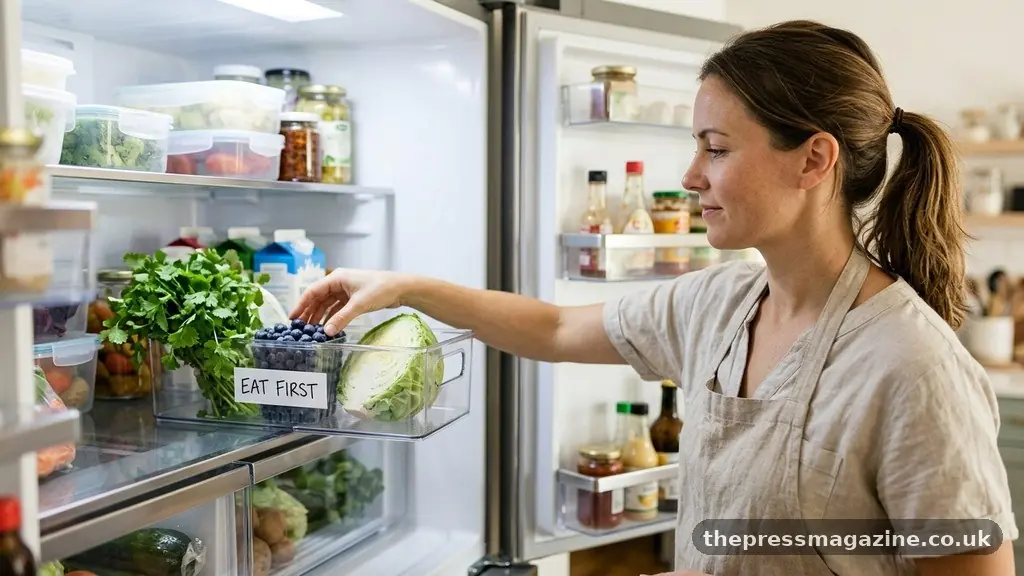
Keep a visible “eat first” area in the refrigerator. Placing those items at eye level makes them easier to remember than food pushed behind tall containers or stacked in opaque bags.
A weekly inventory can also reveal buying patterns. If spinach repeatedly gets thrown away, the solution may be buying a smaller bag, choosing frozen spinach, or planning one specific meal for it instead of hoping it will disappear.
Make the inventory work for your household
Different households need different systems. One person may prefer a handwritten list on the refrigerator, while another may use a shared phone note that includes quantities and planned meals.
Include foods that are easy to overlook, such as frozen bread, half-used condiments, lunchbox snacks, and ingredients stored in a basement freezer. The goal is not to record every item perfectly; it is to create enough visibility to make better decisions.
Build a Realistic Meal Plan
Meal planning reduces waste only when it reflects real life. A plan filled with seven elaborate recipes may look organised on Sunday but become unrealistic after late workdays, school activities, or unexpected changes by Wednesday.
Choose a manageable number of main meals and leave room for leftovers, quick dinners, and a flexible “use what we have” night. A household that cooks four times a week should not shop as if it will prepare a fresh meal from scratch every evening.
Plan ingredients across several dishes. A bunch of coriander might serve in tacos, a curry, and a grain bowl, while roasted vegetables can become a side dish, sandwich filling, or frittata ingredient the next day.
Plan by ingredient, not only by recipe
Recipes often encourage buying a long list of single-use ingredients. Instead, identify overlapping components before shopping and ask how each perishable item will be used.
For example, a plan could pair a roast chicken with sandwiches, soup, and a rice bowl. A large tub of plain yoghurt might serve breakfast, a marinade, and a sauce, making it less likely that an opened container will sit untouched.
Flexible meals are especially useful near the end of the week. Stir-fries, soups, omelettes, pasta dishes, and grain bowls can absorb small amounts of vegetables or cooked grains that would otherwise be discarded.
Match plans to actual portions
Recipe serving sizes are not always the same as household appetites. If a recipe produces six servings but only two people will eat it, decide in advance whether the extra portions will become lunches, be frozen, or be reduced.
Portion control helps at both the cooking and serving stages. Start with moderate servings, then offer seconds, because oversized plates create leftovers that may be less appealing once mixed with sauce or dressing.
Write the plan somewhere everyone can see it. Household members are more likely to eat planned leftovers when they know what is available and when it is intended to be eaten.
Shop With a Precise Grocery List
A grocery list is most useful when it includes quantities, not just ingredients. “Tomatoes” can lead to an unnecessary large bag, while “four tomatoes for salsa and salad” gives the shopper a clearer limit.
Organise the list by store section or shopping route. Group produce, chilled foods, meat, frozen products, and pantry goods so you can move efficiently and avoid picking up extra items while circling the aisles.
Check the list against the food inventory before leaving. Cross off anything already available, then add a note beside ingredients that can be substituted if the store has only a larger package than you need.
Use a pause before impulse purchases
Special offers can create waste if they encourage buying more than the household can use. Before choosing a discount pack, ask three questions: Will we eat it, do we have storage space, and can it be frozen or preserved safely?
Bulk buying makes sense for durable products such as dried beans, oats, flour, or toilet paper when the price and storage conditions are suitable. It is less useful for delicate fruit, salad leaves, bakery items, or unfamiliar products bought purely because the package appears economical.
Unit pricing helps reveal the real value of different package sizes. A larger package is not automatically cheaper per usable portion, especially if part of it ends up in the bin.
Shop in the right order
Buy refrigerated and frozen items later in the trip when possible, then take them home promptly. This protects quality and gives you less time to make unplanned purchases before reaching the checkout.
Shopping after checking the kitchen and eating a small snack can also improve decisions. Hunger tends to make ready-to-eat foods and oversized treats seem more urgent than they are.
Keep one or two substitute ideas in mind. If a recipe needs courgettes but the store has an attractive bunch of broccoli already discounted, changing the plan may prevent both overspending and future spoilage.
Understand Food Dates and Freshness
Package dates can be confusing, but they should not automatically trigger disposal. “Best before” dates generally relate to quality, while “use-by” dates are tied more closely to safety for certain perishable foods.
Use your senses and the product’s storage history for foods where quality can be assessed safely. A stale cracker may be unpleasant but not dangerous, while food marked with a use-by date requires much more caution.
For clear household reference, the FDA’s food safety advice for storing and handling food at home explains safe practices for refrigeration, freezing, and leftovers.
Separate quality decisions from safety decisions
Dry pasta, unopened canned goods, and many shelf-stable products may remain usable after a best before date if the packaging is intact and the product has been stored correctly. Changes in smell, texture, colour, swelling, leaking, or visible mould are reasons to discard food rather than taste-test it.
High-risk foods deserve stricter handling. Cooked meat, seafood, prepared salads, soft cheeses, and leftovers should be refrigerated promptly and used within a safe period based on the food and storage conditions.
Never rely on a date label to override obvious spoilage. A product can deteriorate before its printed date if it was left warm, repeatedly exposed to air, or stored in a refrigerator that is not cold enough.
Label opened foods
Write the opening date on jars, cartons, and containers when you first use them. This small habit makes the food inventory more accurate and prevents the familiar question, “How long has this been here?”
Divide large cooked dishes into shallow containers so they cool and chill more effectively. Add a short note such as “eat Tuesday” or “freeze Thursday” to make the intended next step visible.
Store Food for Longer Use
Proper food storage can extend quality and make groceries easier to use. Keep foods in the conditions they need rather than treating the entire refrigerator as one uniform space.
Store delicate produce where it will be seen and used quickly. Keep ethylene-producing fruit, such as apples and ripe bananas, away from produce that spoils faster in response to the gas, unless you are intentionally trying to speed ripening.
Use airtight containers for dry goods and label them with the product name and purchase date when useful. This protects pantry staples from moisture and pests while making older packages easier to identify.
Apply FIFO at home
FIFO means “first in, first out.” Put newer groceries behind older ones so the item with the earliest purchase or opening date remains at the front.
This system works particularly well for yoghurt, cheese, cans, cereal, frozen vegetables, and sauces. Once a week, move older products forward and check whether they belong on the next meal plan.
Clear containers can help, but they are not essential. A simple basket labelled “use first” may work better than decanting every ingredient, especially in a busy household where the storage system must be easy to maintain.
Use the freezer strategically
Freezing is useful for bread, ripe fruit, cooked grains, herbs, grated cheese, and portions of meat or prepared meals. Freeze food in amounts you can realistically thaw, rather than placing an entire casserole in one large container.
Remove excess air from freezer bags and label the contents with both the date and portion size. Unidentified frozen packages are often wasted because nobody wants to defrost a mystery block.
Freezing does not rescue food that has already spoiled. It preserves food at an earlier stage, so move items into the freezer while they are still fresh and appealing.
Cook, Serve, and Reuse More Precisely
Waste often occurs after shopping, during preparation and serving. Peeling more than necessary, cooking too much rice, or dressing an entire salad can create food that is harder to save.
Measure ingredients when a recipe is unfamiliar, then adjust quantities once you understand your household’s preferences. A cup of uncooked rice may produce far more cooked food than a family expects, especially when it is served alongside several other dishes.
Prepare components separately when possible. Store undressed greens, plain grains, roasted vegetables, and sauces apart so leftovers remain versatile for another meal.
Give leftovers a planned destination
Leftovers are more likely to be eaten when they are transformed rather than simply repeated. Roast vegetables can fill a wrap, cooked chicken can become soup, and a small amount of curry can accompany rice and a fried egg.
Schedule a leftover lunch or dinner before the food loses its appeal. If no one wants the same meal twice, freeze it in a clearly labelled single portion or combine it with a new ingredient.
Use clean serving utensils and refrigerate leftovers promptly. Foods left sitting out for extended periods may become unsafe, even if they still look and smell normal.
Reduce preparation scraps thoughtfully
Some trimmings can be used safely: herb stems may flavour stock, broccoli stalks can be sliced into a stir-fry, and citrus zest can brighten dressings or baked goods. These uses should fit your normal cooking habits rather than create another unfinished project.
Keep scrap ideas simple. If a small amount of peel or stalk will sit in the freezer for months, using the compost bin may be a more practical form of waste reduction.
Portion cooked food into containers that match likely meals. A single-serving container is more useful for a work lunch than a deep dish requiring repeated reheating and extra washing.
Balance Budget, Convenience, and Waste
Reducing household waste should make life easier, not turn grocery shopping into a daily test of discipline. Convenience products can be reasonable choices when they prevent a household from abandoning ingredients or ordering food because cooking feels too demanding.
Pre-cut vegetables may cost more per kilogram, but a smaller package that gets eaten can be better value than a cheaper whole vegetable that is forgotten. The right comparison is the cost of food used, not only the shelf price.
Consider the time required to prepare an ingredient. A household that rarely cooks beans from scratch may waste dried beans, while canned beans can become a dependable pantry staple with a much higher chance of being used.
Track what gets discarded
For one week, write down what goes into the bin and why. Categories such as “bought too much,” “forgotten,” “spoiled quickly,” “cooked too much,” and “unpopular” reveal different solutions.
If the same item appears repeatedly, change one variable at a time. Buy a smaller quantity, move it to a visible shelf, choose frozen, or assign it to a specific meal.
A short record can also expose false savings. A three-for-two offer is not a bargain if the third item is discarded, while a slightly more expensive small package may fit the household’s actual consumption.
Share surplus safely
Extra unopened shelf-stable foods can often be offered to neighbours, community pantries, or local food banks, subject to their acceptance rules. Share food before it is close to spoilage and provide clear information about packaging and dates.
For cooked dishes, share only when safe preparation, cooling, refrigeration, and transport can be maintained. Do not use donation or sharing as an excuse to keep questionable food.
Households can also coordinate occasional swaps. One person with excess herbs or garden produce may trade with someone who has more bread, eggs, or preserved goods, reducing duplication without encouraging extra shopping.
Build a Routine That Lasts
The best food waste reduction system is repeatable. A ten-minute weekly reset can include checking the refrigerator, reviewing the freezer, choosing meals, and writing a grocery list.
Assign the routine to a predictable day, but keep it flexible when schedules change. A missed Sunday plan should not cancel the whole system; complete a shorter version on Monday and use quick meals until the next shop.
Include everyone who eats in the household. Children can choose one fruit for lunchboxes, partners can report ingredients running low, and older family members may know which leftovers are still appealing.
Use a simple weekly checklist
- Check the refrigerator, freezer, and pantry before shopping.
- Move older foods forward using FIFO.
- Choose meals that use the most perishable ingredients first.
- Write quantities on the grocery list.
- Decide which leftovers will become lunches, new meals, or frozen portions.
- Review one discarded item and identify a practical change for next week.
Keep the checklist visible until it becomes familiar. The aim is to reduce mental effort, not add another complicated household responsibility.
Improve one habit at a time
Start with the habit that offers the clearest benefit. If produce spoils most often, begin with smaller purchases and better refrigerator placement rather than trying to redesign every meal.
After that habit feels ordinary, add a second one, such as labelling leftovers or planning a weekly “use it up” meal. Gradual change is easier to sustain than a strict system that depends on perfect attention.
Celebrate food that gets used. A successful soup made from several overlooked vegetables is evidence that the system is working, even if a forgotten item occasionally still reaches the bin.
Frequently Asked Questions
What is the most effective grocery habit for reducing waste?
Checking your food inventory before making a grocery list is often the strongest starting point. It prevents duplicate purchases and helps you plan meals around ingredients that need attention soon.
Is bulk buying always a good way to save money?
No. Bulk buying works best for foods your household already uses regularly and can store properly, such as oats, rice, or canned goods. Large packs of delicate produce or unfamiliar products may cost more if part of the package is thrown away.
How can I stop forgetting leftovers?
Place leftovers in clear containers at eye level, label them with the date, and assign them a meal before cooking something new. Freezing single portions is useful when nobody wants the leftovers immediately.
Should food be discarded after its best before date?
Not automatically. A best before date generally concerns quality, so inspect the packaging and food carefully, while treating use-by dates and high-risk perishables with greater caution. Never eat food that shows spoilage or has been stored unsafely.
How often should I plan meals and check supplies?
A weekly review works well for many households, but the schedule can be shorter or longer depending on shopping frequency. Even a quick check before each trip is valuable if it captures fresh food, leftovers, freezer items, and pantry staples.
Make Each Shopping Trip Count
Smart Grocery Shopping Habits That Help Reduce Household Waste come down to a connected set of choices: inspect what you own, plan meals you will genuinely cook, buy realistic quantities, and store food so it remains visible and usable. No single trick prevents every spoiled item.
Start with one change this week, such as a food inventory or a labelled leftovers shelf, then build from there. When shopping reflects real routines rather than idealised plans, saving money and wasting less food can become a natural part of everyday life.