Simple Ways to Reduce Paper Clutter Around the House
Simple Ways to Reduce Paper Clutter Around the House can make daily life calmer without turning your home into a filing office. A few thoughtful decisions about mail, receipts, school papers, medical records, and old bills can free shelves and worktops while making important documents easier to find.
The most effective approach is simple: reduce what enters the house, decide what deserves a home, digitise useful information, and safely remove the rest. With a small routine and a practical home filing system, paper organisation becomes a manageable household habit rather than a weekend-long rescue project.
Start With Three Decisions: Keep, Scan, or Recycle
The quickest answer to how to reduce paper clutter is to make every sheet earn its place. Each item should go into one of three categories: keep the original, scan the information and dispose of the paper, or recycle or shred it because it no longer serves a purpose.
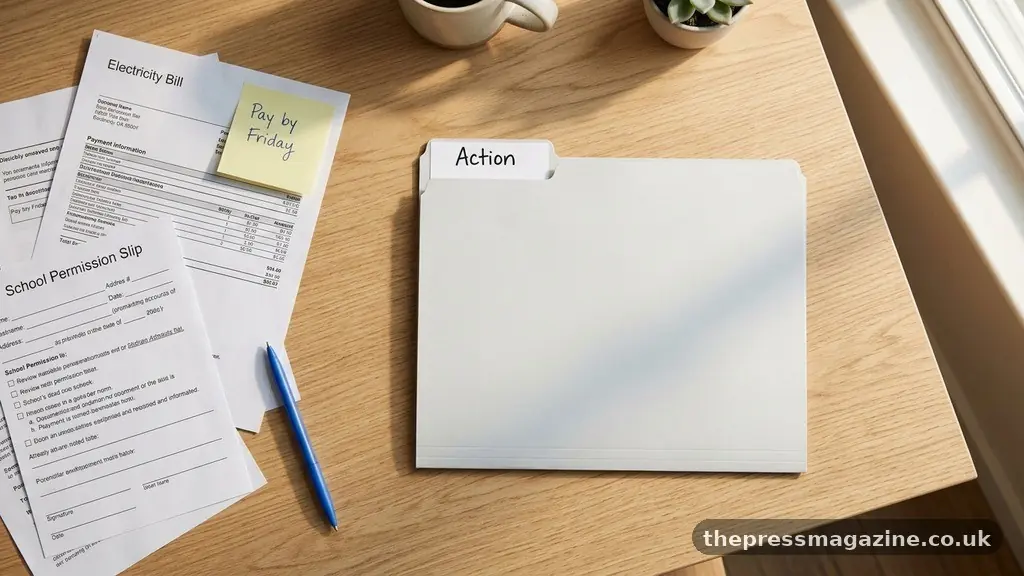
Don’t begin by buying storage boxes. Start with a clear surface, a recycling bag, a shredder or secure shredding container, and one temporary folder marked “action.” This setup prevents the common mistake of moving an untidy pile from the dining table into an untidy drawer.
Keep original documents when the physical copy has legal, financial, identity, medical, or sentimental value. Examples include passports, birth certificates, property deeds, wills, vehicle titles, adoption records, immigration documents, and certificates that an organisation may specifically require in original form.
Scan papers that contain useful reference information but don’t need to exist physically. A warranty, appliance manual, paid invoice, school calendar, or repair receipt may be easier to find as a searchable PDF than inside a filing cabinet.
Recycling paperwork is appropriate only after personal information has been removed or rendered unreadable. Bank details, account numbers, addresses, health information, and identification numbers should go through a shredder, particularly if the paper includes enough information to identify your household.
- Keep: originals with legal, identity, property, medical, or sentimental importance.
- Scan: reference documents, receipts, manuals, and records you may need later.
- Act: unpaid bills, forms, invitations, renewals, and anything with a deadline.
- Shred: papers containing sensitive personal or financial information.
- Recycle: clean, non-confidential paper that has no continuing use.
That last category matters. “I might need this someday” is not a retention policy, and it often creates years of paper clutter. If you cannot name the likely task, person, or situation that would require the document, pause before storing it permanently.
Stop Paper From Entering Every Room
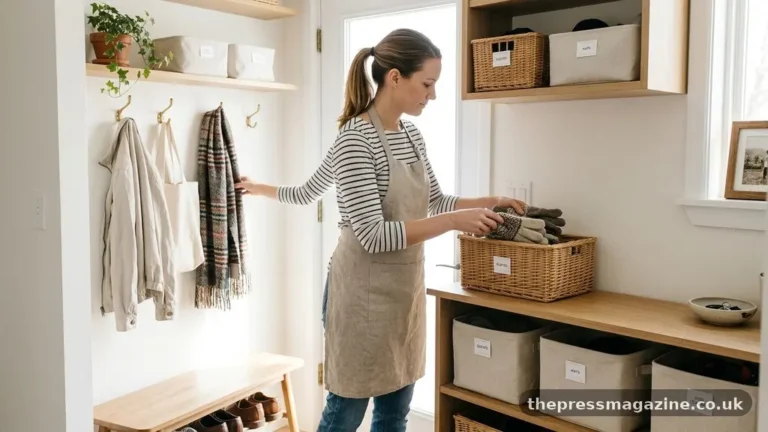
Paper organisation becomes much easier when mail sorting happens at the point of entry. Put a small tray, basket, or wall pocket near the door rather than allowing envelopes to travel to the kitchen counter, bedroom, and home office.
Sort incoming mail immediately into four streams: action, file, recycle, and shred. Advertising can usually be removed at once, while a bill should move into the action area and a document worth keeping should reach its proper folder before the day ends.
Open envelopes over the recycling bin whenever possible. This eliminates outer packaging immediately and makes it less likely that junk inserts, duplicate notices, and promotional leaflets will join the household records you actually need.
Make an action station
The action station should be temporary, visible, and limited in size. A single folder can hold forms that need signatures, invoices awaiting payment, school permissions, appointment letters, and renewal notices.
Give each item a next step and a date. “Pay electricity bill by Friday” is useful; “electricity” written on a pile is not. If several adults share responsibility, write the person’s initials on the document or use separate sections inside the folder.
Review this folder once or twice a week. Completed papers should be filed or destroyed immediately, because an action folder that never gets emptied becomes another form of paper storage.
Reduce the flow at its source
Choose electronic billing, digital statements, and online notices for accounts that offer secure access. Keep a short list of organisations that still send paper, then change preferences during a quiet ten-minute session rather than trying to solve everything in one afternoon.
Be selective about paperless settings. Digital storage reduces physical clutter, but it doesn’t remove the need for passwords, backups, and a sensible naming system. A missing email can be just as frustrating as a missing document.
Receipts deserve a separate decision. Keep receipts for returns, warranties, tax records, or expensive purchases, but don’t preserve every grocery receipt after the relevant transaction has cleared and no return or reimbursement is possible.
Build a Small Home Filing System
A home filing system should reflect the way your household searches for information, not the categories used by a large corporation. Broad labels are easier to maintain than dozens of narrow folders that require constant judgment.
A filing cabinet can work well for families with substantial household records, but a portable file box or a few labelled binders may be enough for an apartment. The best container is the one that fits the amount of paper you genuinely need to retain.
Use categories that answer real questions. “Where is the boiler warranty?” should lead to “Home,” while “Where is the vaccination record?” should lead to “Medical,” not a folder labelled “Miscellaneous.”
| Folder or category | Examples | Suggested treatment |
|---|---|---|
| Identity and legal | Passports, birth certificates, wills, licenses | Keep originals in secure storage |
| Home and property | Deeds, leases, warranties, repair invoices | Keep active records; scan reference copies |
| Financial | Statements, tax records, loan documents | Follow applicable retention rules and shred securely |
| Medical | Test results, prescriptions, insurance correspondence | Keep useful history and protect confidential papers |
| Vehicles | Titles, service records, insurance documents | Keep ownership and active coverage records |
| Personal and school | Certificates, report cards, selected artwork | Keep meaningful originals; scan bulky keepsakes |
Place the most frequently used folders at eye level. Records needed only once a year can go on a higher shelf, while passports, insurance information, and current financial paperwork should not be buried behind outdated manuals.
Use a retention review box
If you are unsure whether a paper should stay, place it in a dated review box instead of forcing an immediate decision. Write the review month on the outside, then revisit the contents after six or twelve months.
This method gives uncertain documents a controlled pause rather than permanent residency. If no one has needed an item during the review period and no legal or financial reason requires it, scanning or secure disposal may be appropriate.
Retention rules vary by country and document type, so don’t rely on a universal number of years. For tax, employment, health, insurance, and legal records, check the relevant government agency, professional adviser, insurer, or provider before destroying anything important.
Scan Useful Papers Without Creating Digital Chaos
Document scanning is valuable only when the digital copy can be found later. A phone scanning app, multifunction printer, or dedicated scanner can create clear PDFs, but the file needs a meaningful name and a predictable destination.
A practical naming format is date – subject – person or provider. For example, “2025-04-18 – Boiler service invoice – Green Heating” is more useful than “IMG_4832,” especially when you are searching several years later.
Use folders that mirror your physical filing system: Identity, Home, Financial, Medical, Vehicles, and Personal. Consistency matters more than elaborate software, because a simple system used every week will outperform a sophisticated system abandoned after one scanning session.
Choose a safe digital home
Cloud storage can protect documents from a lost laptop, damaged filing box, or household move, but it should be paired with a strong password and two-factor authentication. Sensitive records deserve extra care because convenience should not mean unrestricted access.
Keep at least one additional backup for documents that would be difficult or expensive to replace. An encrypted external drive stored separately from the computer can provide useful protection if an account is locked or a device fails.
Don’t scan every scrap of paper simply because scanning is possible. A digital archive full of expired coupons, duplicate statements, and blurry photographs creates search clutter, even if it doesn’t occupy a physical shelf.
Scan in batches
Work by category rather than by random pile. Scanning all current insurance papers together, for example, makes it easier to check that pages are complete and that every file has landed in the correct folder.
After saving a document, open the PDF and check that the pages are readable. A scan with a missing signature, cut-off account number, or unreadable date is not a reliable replacement for the original.
Once a scan is verified, follow the document’s retention needs. Some originals should remain even after scanning, while others can be securely shredded or recycled because the digital copy meets the household’s practical purpose.
Handle Sensitive and Important Documents Carefully
Not all paper clutter carries the same risk. A takeaway menu and a medical report may occupy equal space, but losing the medical report can create privacy, legal, or financial problems that a misplaced menu never will.
Keep important documents in a location protected from ordinary household accidents. A fire-resistant safe, locked drawer, or secure filing box may be appropriate depending on the document, the home, and the level of risk.
Make sure trusted household members know where essential records are located. The goal isn’t to expose private information to everyone; it is to prevent a partner or family member from being unable to find insurance details, emergency contacts, or identity documents when they are urgently needed.
Separate active records from history
Active records support a current task. These include a current lease, active insurance policy, unpaid bill, school form, or warranty for an appliance still in use.
Historical records may be useful for reference but don’t need to sit in the everyday filing area. Moving old vehicle service invoices or expired policies into an archive box reduces visual noise and makes current information quicker to reach.
When a policy, contract, or account changes, replace the old version only when you are certain the earlier document has no continuing relevance. Some records establish a history of payments, ownership, treatment, or communication.
Dispose of paper safely
A cross-cut shredder is generally more suitable for sensitive household paperwork than simply tearing a page in half. Shred statements, pre-approved credit offers, labels, medical correspondence, and documents showing account or identity information.
Empty the shredder before it becomes overloaded, and avoid feeding thick envelopes or large paper clips if the machine is not designed for them. If the volume is too high, use a reputable secure shredding service rather than placing confidential papers in ordinary recycling.
Remove plastic sleeves, binder clips, photographs, and laminated materials before recycling paperwork if your local recycling programme requires separation. Recycling rules differ by location, so follow the instructions provided by your local authority.
Reduce Sentimental Paper Without Losing the Memories
Sentimental papers are often the hardest category because their value isn’t practical. A child’s first drawing, a handwritten recipe, or a concert programme may matter deeply even though it has no administrative purpose.
Choose a defined memory container for each person or life stage. The container becomes a natural limit: when it is full, the family must select the pieces that best represent the story rather than adding every new sheet indefinitely.
Photograph large artwork before recycling it. A well-lit image preserves the colour, date, and context while freeing the physical room needed to display a smaller selection of originals.
Create a memory rule
Try keeping one item that represents an event rather than every item produced during it. For a school year, that might be one report, one favourite drawing, and a class photograph instead of an entire folder of worksheets.
Write a brief note on the back of an important keepsake. A date, child’s age, location, or sentence about why the item mattered can preserve context that a photograph alone cannot provide.
Digital albums can help relatives share memories without creating duplicate boxes in several homes. Store the image with a clear date and name, then back up the collection just as you would other important digital records.
Make display space temporary
A rotating display gives meaningful papers a moment in the home without making every wall a permanent archive. Choose a frame, clip line, or magnetic board, and replace the displayed work at a regular interval.
When a new item replaces an old one, decide whether the older piece belongs in the memory container, should be photographed, or can be released. This small decision prevents display areas from becoming hidden storage zones.
Be kind to yourself during sentimental decluttering. Keeping a few meaningful papers is not a failure to reduce clutter; it is a deliberate choice about what deserves space.
Establish Weekly Habits That Keep Paper Under Control
Decluttering succeeds when the maintenance routine is smaller than the original problem. A ten-minute paper reset once or twice a week can prevent the dining table from becoming the household’s unofficial filing cabinet.
Choose a consistent time, such as Sunday evening or the day after bin collection. Empty the mail tray, process the action folder, file completed documents, and remove recycling or shredded material from the home.
Keep supplies together. A pen, labels, envelopes, a shredder, and a scanner app are more useful when they are easy to reach rather than scattered through different rooms.
Use a monthly paper check
Once a month, inspect the filing cabinet and digital folders for expired information. Remove old insurance schedules, outdated appointment reminders, duplicate receipts, and instruction manuals for products you no longer own.
Look at the “miscellaneous” folder with particular suspicion. It often hides papers that lack a clear purpose, and dividing or deleting its contents can reveal where the filing system needs a better category.
Review your mail preferences during this check. If an organisation keeps sending paper statements after you selected electronic delivery, contact it directly rather than allowing the unwanted documents to accumulate.
Give every room a paper boundary
Designate one main paper-processing area. Bedrooms, sofas, and kitchen worktops should not become secondary filing stations because papers spread quickly once several surfaces are involved.
For children, create one school-paper pocket per child. Parents can then review notices and assignments without mixing them with bills, recipes, or adult paperwork.
For home projects, use one temporary project folder. When the repair, move, renovation, or insurance claim ends, archive only the records that could matter later and dispose of the rest.
Frequently Asked Questions
How long should I keep household paperwork?
There is no single retention period for every document. Keep identity, property, legal, medical, tax, insurance, and ownership records according to the rules that apply in your location and situation, and ask a qualified professional when the consequences of disposal are serious.
Can I shred all paper after scanning it?
No. Scanning creates a useful backup, but some originals may be required for legal, identity, property, or official purposes. Verify that a digital copy is acceptable before destroying the paper, and protect the scanned file with secure digital storage and a backup.
What should I do with old bills and receipts?
Keep bills or receipts that support tax claims, warranties, returns, reimbursements, ownership, or disputes for the relevant period. Once their purpose has ended, shred papers containing personal information and recycle non-confidential documents according to local rules.
Is a filing cabinet necessary for a paperless home?
No. A small locked box, portable file system, or set of labelled folders may be enough for a household that receives little paper. A filing cabinet is useful when you have many active records, but storage capacity should not encourage unnecessary retention.
How do I deal with paper from a family member who won’t declutter?
Don’t discard someone else’s personal or sentimental documents without permission. Offer a defined container, help sort duplicates and expired paperwork, and agree on a safe place for important records while allowing the owner to make the final decisions.
Make the System Easy to Keep
The most effective simple Ways to Reduce Paper Clutter Around the House are repeatable: sort mail at the door, limit the action folder, file important originals, scan useful references, and dispose of sensitive papers safely. Start with one surface and one category rather than waiting for a perfect free weekend.
After the first reset, protect the progress with a short weekly review and a monthly retention check. A calmer paper environment comes from ordinary decisions made consistently, and you can adjust the system as your household changes.