Practical Storage Ideas for Homes With Limited Closet Space
Practical Storage Ideas for Homes With Limited Closet Space start with one simple shift: use the room’s height, hidden gaps, and furniture more deliberately. A narrow bedroom can gain useful capacity from under-bed storage, wall-mounted shelving, over-the-door organizers, and a better seasonal clothing rotation without feeling crowded.
The best solutions are not expensive by default. They match each item to the place where it is used, keep daily essentials easy to reach, and reserve less convenient spaces for things used only occasionally. With a short decluttering session and a few carefully chosen additions, even a small home can feel calmer and easier to maintain.
Start With a Storage Plan That Uses Every Zone
The fastest answer is to divide storage into four zones: daily-use space, occasional-use space, hidden space, and vertical space. Daily items belong in drawers, open baskets, or accessible shelves, while luggage, spare bedding, and holiday clothing can move under the bed or onto a high shelf.
Take measurements before buying anything. Record the width and depth of unused wall sections, the clearance beneath the bed, the inside dimensions of doors, and the space above kitchen or bedroom furniture.
A storage plan should also follow the way you move through the home. Coats and shoes belong near the entrance, hair tools should stay close to the bathroom, and folded clothing works best near the bed rather than in a distant room.
Assign a home to each category
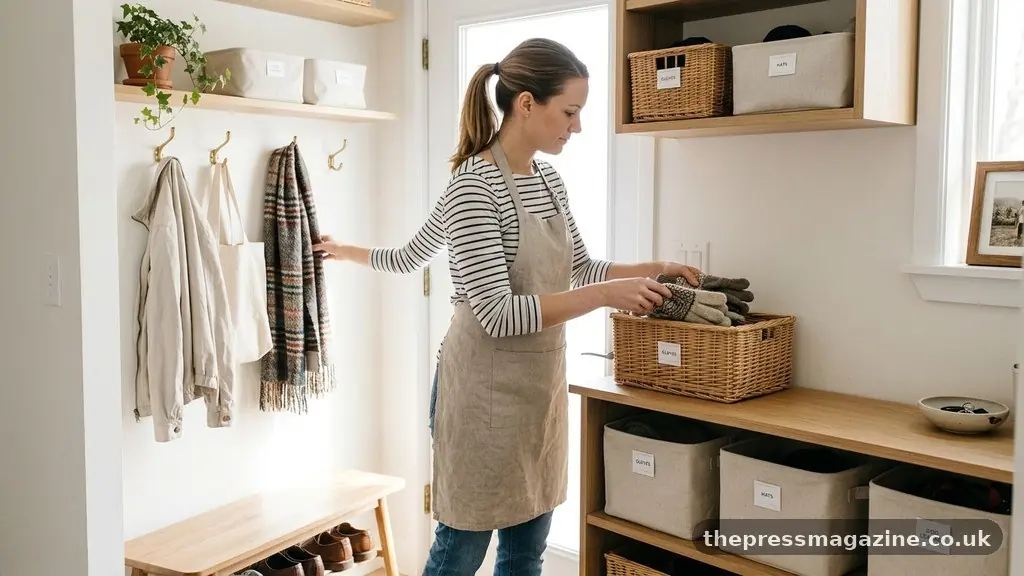
Group belongings by function instead of by the container you happen to own. For example, keep scarves, gloves, and hats together near the entryway, even if some go in a drawer and others hang on hooks.
Use a simple priority system: items used every day should be reachable with one hand, weekly items can sit behind a door or inside a cabinet, and seasonal possessions can occupy high shelves or sealed bins. This prevents the common mistake of putting the most-used objects in the least convenient locations.
Before purchasing organizers, remove obvious duplicates, damaged items, and clothing that no longer fits. Decluttering creates capacity without taking up another square inch, and it makes every later storage decision more accurate.
- Daily items: keep them between waist and shoulder height.
- Weekly items: place them in labeled bins, drawers, or accessible cabinets.
- Seasonal items: use under-bed storage, high shelves, or vacuum storage bags.
- Rarely used items: store safely in the highest or deepest available areas.
Build Upward With Shelves, Rails, and Hooks
Vertical storage is often the biggest unused resource in a small room. A wall that cannot accommodate a deep cabinet may still hold a narrow shelf, a rail with hooks, or a column of compact baskets.
Wall-mounted shelving works especially well above a desk, dresser, laundry area, or bedroom door. Use the shelves for folded bags, small boxes, books, or attractive baskets, and keep the floor clear for movement.
Floating shelves create a lighter appearance because they have no visible brackets. They are useful for lightweight belongings, but heavy books, cookware, or storage bins need properly installed supports and wall anchors suited to the wall material.
For rented homes, freestanding ladder shelves or tension-pole systems can provide similar height without extensive drilling. Always check the manufacturer’s weight limit and position tall furniture where it won’t obstruct a doorway or heating vent.
Make wall storage work harder
A pegboard can hold handbags, craft tools, cleaning supplies, or frequently used kitchen equipment. Its hooks and small shelves can be rearranged as needs change, which makes it more flexible than a fixed rack.
Install a narrow rail beneath a shelf for hanging mugs, utensils, or accessories. In a bedroom, a rail with slim hooks can keep belts, necklaces, and lightweight scarves visible instead of tangled in a drawer.
Use the space above doors carefully. A high shelf is excellent for spare towels or luggage, but it should be deep enough to support containers securely and low enough that a stable step stool provides safe access.
Furniture anchoring matters whenever shelves or tall storage units are present, particularly in homes with children or pets. The U.S. Consumer Product Safety Commission’s furniture anchoring guidance explains why tip restraints should be attached according to the product instructions.
Improve the Bedroom Without Adding a Larger Wardrobe
A bedroom often has more storage potential than it appears to have. The space beneath the bed, the back of the door, the side of a dresser, and the wall above the headboard can all support different categories of belongings.
Under-bed storage is best for flat, bulky items that are used occasionally. Choose lidded containers for dust protection, soft zippered bags for clothing, and shallow drawers if you want to reach items without pulling out a large box.
Measure the full clearance before buying a container. Bed frames, wheels, and central support legs can reduce the usable width, while thick carpet may make a box difficult to slide.
Organize clothes by frequency
Keep current-season clothing in the easiest-to-reach drawers and hanging areas. Move coats, heavy knitwear, ski clothing, and formal outfits elsewhere during warmer months through a seasonal clothing rotation.
Vacuum storage bags can reduce the volume of clean, dry soft goods such as spare duvets and winter coats. They are less suitable for delicate fabrics, leather, wool that needs airflow, or anything that could be damaged by prolonged compression.
Drawer dividers help prevent small items from spreading across an entire drawer. Assign separate sections for underwear, socks, belts, workout accessories, or sleepwear, and leave a little unused space so the drawer remains easy to close.
File-folding T-shirts and casual tops lets you see more pieces at once. The method is useful in deep drawers because each garment stands upright rather than hiding beneath the garments placed above it.
Use the door and headboard area
Over-the-door organizers can hold shoes, hair products, handbags, cleaning supplies, or small accessories. Select a model with a slim profile if the door opens toward a wall, and check that the hooks don’t interfere with the latch.
A headboard with built-in shelves can replace bedside tables in a narrow bedroom. If a new headboard is not practical, mount a shallow shelf above the bed for books and small lamps, leaving enough clearance to avoid bumping your head.
Hooks on the side of a wardrobe or dresser create a useful home for tomorrow’s outfit, a robe, or frequently worn bags. They also reduce the tendency to place clothing on a chair, where it quickly becomes an unofficial second closet.
Choose Furniture That Performs Two Jobs
Multipurpose furniture earns its floor space by combining storage with another function. A bed with drawers, a bench with a lift-up seat, or a desk with shelving can replace separate pieces and make a small room feel less crowded.
Storage ottomans are particularly useful in living rooms and bedrooms. They can hold blankets, board games, extra cushions, or folded linens while providing a footrest or occasional seating.
Select an ottoman with a firm lid and enough internal depth for the items you plan to store. A shallow model may be attractive but frustrating if blankets have to be folded into an awkward shape to fit.
Match furniture to the room’s traffic
In a narrow hallway, choose a slim console with drawers rather than a deep cabinet. It can store keys, pet leads, mail, and reusable shopping bags without reducing the walking path.
An entryway storage bench creates a place to sit while putting on shoes and can conceal footwear beneath the seat. Add wall hooks above it for coats, but limit the number of hooks in active use so the area doesn’t become visually overloaded.
A drop-leaf table can serve as a dining surface, work desk, or folding station when opened. Once closed, it frees valuable floor space and can leave room for a narrow cabinet or rolling cart nearby.
Look for furniture with accessible compartments rather than storage that is technically large but difficult to use. A drawer that opens fully every day is usually more valuable than a deep cavity that requires moving three other objects first.
Make the Entryway and Living Room More Efficient
Entryway storage should handle the items that arrive with you: shoes, outerwear, bags, umbrellas, keys, and mail. When these categories lack a designated landing place, they migrate onto chairs, counters, and the floor.
Start with a tray for small objects and a small basket for outgoing items. A hook at shoulder height can hold the bag used most often, while a higher row can store occasional coats if it remains safely reachable.
For shoes, use a narrow vertical rack or a two-tier shelf rather than a wide basket that becomes a pile. Keep only the current rotation near the door and move special-occasion or seasonal shoes to another location.
Control visual clutter in shared rooms
Open shelving is convenient, but too many visible objects can make a compact room feel busy. Use matching baskets or boxes on lower shelves and reserve open display space for a limited number of books, plants, or decorative pieces.
Remote controls, chargers, and gaming accessories can live in a small lidded box beside the sofa. Labeling is optional, but assigning one container to each category makes tidying faster after a busy evening.
Choose a coffee table with a shelf or drawers if the room lacks cabinet space. Keep the top mostly clear, then use the lower compartment for books, blankets, or items that need to stay close but out of sight.
Wall-mounted shelving above a sofa can replace a bulky bookcase, provided it is installed at a safe height and secured for the intended load. Leave enough open wall around the shelves so the arrangement feels intentional rather than packed.
Turn Kitchens, Bathrooms, and Utility Areas Into Working Storage
Small-space storage has to include rooms that are often overlooked. Kitchens, bathrooms, and laundry areas may have narrow gaps beside appliances, unused cabinet doors, and vertical corners that can support compact organizers.
A slim rolling cart can fit between a refrigerator and a wall for spices, oils, cleaning products, or pantry supplies. Measure the gap at several points because walls and baseboards are not always perfectly straight.
Install hooks inside cabinet doors for measuring spoons, brushes, or pot lids if the door still closes without pressure. Adhesive products should be used only on clean, compatible surfaces and within their stated weight limit.
Use small compartments for small supplies
Drawer dividers are useful in kitchens for utensils, food wraps, and reusable bags. In bathrooms, shallow trays can separate skincare, grooming tools, and medicines so that daily items don’t become buried.
Keep medicines in their original labeled containers and follow local guidance for safe storage and disposal. A bathroom’s heat and humidity can damage some products, so a cool, dry cabinet may be preferable.
Over-the-door organizers can create extra capacity in a pantry or utility closet. Use clear pockets for sponges, cloths, foil, and small cleaning tools, but avoid placing heavy bottles on a door that was not designed to carry them.
Ceiling-height shelving can store spare paper goods and infrequently used appliances. Place heavy items at lower levels and lighter supplies above them, reducing the risk of injury when retrieving something with a step stool.
| Area | Useful storage addition | Best items to store |
|---|---|---|
| Kitchen gap | Slim rolling cart | Spices, oils, canned goods |
| Bathroom door | Hanging organizer | Hair accessories, brushes, toiletries |
| Laundry area | Wall rail or pegboard | Clips, brushes, small tools |
| Under the sink | Stackable bins | Cleaning cloths, spare products |
Use Modular Systems Instead of One Fixed Solution
Modular closet systems are helpful when a standard wardrobe has too much hanging space and not enough shelves, drawers, or shoe storage. Their adjustable rails and components let you respond to the actual mix of clothing in your home.
Someone with mostly folded clothing may gain more from two shelf columns and a few drawers than from a tall rail. A person with uniforms, dresses, or coats may need double hanging space, plus a narrow shelf for accessories.
Measure your wardrobe from floor to ceiling and note obstructions such as skirting boards, doors, and existing rails. Plan for the thickness of baskets and drawers, not just the empty dimensions.
Build in stages
You don’t need to replace every storage unit at once. Begin with the most frustrating problem, such as a crowded hanging rail or a floor covered with shoes, then add one component that solves that problem.
Use matching containers only where they improve access or appearance. A uniform set of boxes can look tidy, but oddly shaped belongings may fit better in open baskets, drawers, or adjustable compartments.
Label high shelves and opaque bins with broad categories such as “winter accessories” or “guest bedding.” Labels should describe the contents accurately, not simply identify the room where the container happens to sit.
Leave expansion space in a modular system. If every shelf is packed on installation day, the arrangement has no room for a new coat, replacement linens, or a change in household needs.
Keep the System Easy to Maintain
Good storage is not only about fitting more items into a room. It should make the preferred behavior easier than dropping belongings on the nearest chair or countertop.
Place a laundry hamper where clothes are removed, not where you wish they were removed. Keep a donation bag in a closet or utility area so that unwanted items can leave the home during ordinary tidying rather than waiting for a major clear-out.
Use a one-in, one-out rule for categories that expand quickly, such as mugs, shoes, coats, and reusable shopping bags. The rule doesn’t need to apply rigidly to every possession, but it creates a useful pause before adding another item.
Review storage by season
At the start of each season, inspect clothing, bedding, and outdoor equipment before storing it. Clean and dry fabrics first, repair small damage, and avoid sealing anything damp inside a box or vacuum bag.
Keep a short inventory of containers stored in hard-to-reach locations. A note on your phone can prevent buying duplicate bedding or searching through every bin for one set of holiday decorations.
Reassess after two weeks rather than judging the setup immediately. If a basket remains empty or a drawer is constantly overfilled, change the location or category instead of blaming the entire storage plan.
Make a five-minute reset part of the evening routine. Returning shoes to the rack, placing keys in the tray, and folding a blanket into its ottoman takes less time than recovering from weeks of accumulated clutter.
Frequently Asked Questions
What is the best storage solution when there is almost no closet space?
Start with a combination of a freestanding wardrobe or modular closet system, under-bed storage, and wall-mounted hooks or shelves. This spreads clothing across hanging, folded, and hidden zones instead of forcing everything into one overcrowded unit.
Are vacuum storage bags safe for all clothing?
No. They work best for clean, dry soft goods that can tolerate compression, such as some seasonal bedding and synthetic clothing. Delicate fabrics, leather, and items that need airflow should generally be stored in breathable containers according to their care instructions.
How can renters add storage without drilling into walls?
Use freestanding shelves, tension poles, over-the-door organizers, rolling carts, and removable hooks within their stated limits. If you do install anything, review the lease and use products designed for the wall surface rather than relying on a weak adhesive for heavy loads.
How do I stop open shelving from looking messy?
Limit the number of visible categories, group small items in matching or coordinated baskets, and leave some empty space between objects. Store visually noisy or rarely used belongings in lidded containers on lower or higher shelves.
What should go under the bed?
Use that space for flat, infrequently used items such as spare linens, luggage accessories, seasonal clothing, or keepsakes. Avoid storing anything damp, fragile, or needed every day unless the container can be reached easily and protected from dust.
Make Small Storage Feel Natural
Practical Storage Ideas for Homes With Limited Closet Space work best when they follow daily habits rather than fight them. Start with decluttering, move seasonal belongings into less convenient zones, and add vertical or hidden capacity only where a real gap exists.
Choose one improvement this week: a shoe rack by the door, a divided drawer, a shelf above a desk, or a container beneath the bed. Small, well-placed changes can make the whole home easier to use, and you can build on them as your routines become clearer.