Simple Ways to Bring More Natural Light Into Your Home
Simple ways to bring more natural light into your home can make rooms feel larger, calmer, and more welcoming without a major renovation. The best results usually come from combining small changes—lighter window treatments, carefully placed mirrors, brighter finishes—with targeted improvements such as larger windows, glass doors, or a skylight.
Natural light also changes throughout the day, so window orientation and the room’s surface colours matter as much as the size of the opening. With a thoughtful approach, you can brighten dark corners, reduce daytime reliance on electric lights, and create a home that feels more connected to the outdoors.
Start With the Easiest Changes First
The quickest way to bring in more daylight is to remove anything blocking the light you already have. Move tall furniture away from windows, trim branches outside the glass, and replace heavy curtains with sheer curtains or adjustable blinds that can be opened fully during the brightest part of the day.
Window glass may be clean while the surrounding room still feels dim. Wash the inside and outside of accessible windows, dust blinds and curtain rods, and clear decorations from the sill so sunlight can travel farther into the space.
Mirrors are especially useful opposite or beside a window because they reflect daylight into areas that do not receive direct sun. A large, pale-framed mirror can spread brightness across a wall, while several smaller mirrors can work in a narrow hallway or entrance.
Reflective surfaces help too, but moderation matters. Gloss-finish tiles, polished stone, satin paint, glass tabletops, and metallic accents can bounce light around a room, whereas too many shiny materials may create glare or make the space feel cold.
Use a simple test before buying anything: stand in the room at morning, midday, and late afternoon, then note where the brightest patches land. This reveals whether a mirror should face a window, sit at a right angle, or move to another wall entirely.
- Clear bulky furniture from the window’s immediate path.
- Use sheer curtains or blinds that stack outside the glass when open.
- Place mirrors where they reflect daylight rather than a cluttered surface.
- Choose lighter wall colours for rooms with limited sun exposure.
- Clean glazing and remove plants or ornaments that shade the lower pane.
These low-cost steps won’t change the amount of sunlight entering through the glass, but they can improve how far that light travels. In many homes, the difference is noticeable before any construction begins.
Choose Window Treatments That Let Daylight Travel
Window treatments control both light and privacy, so the ideal choice depends on the room’s position and use. A living room facing a private garden might need only curtains, while a street-facing bedroom may need a layered treatment that allows daylight in without leaving the room exposed.
Sheer curtains soften strong sun and maintain a bright appearance, especially when hung close to the ceiling and extended beyond both sides of the frame. That placement lets the fabric stack away from the glass instead of covering the edges whenever the curtains are open.
Roller shades made from translucent fabric offer another practical option. They diffuse direct sunlight, reduce harsh contrast, and can be raised completely when the room needs maximum brightness.
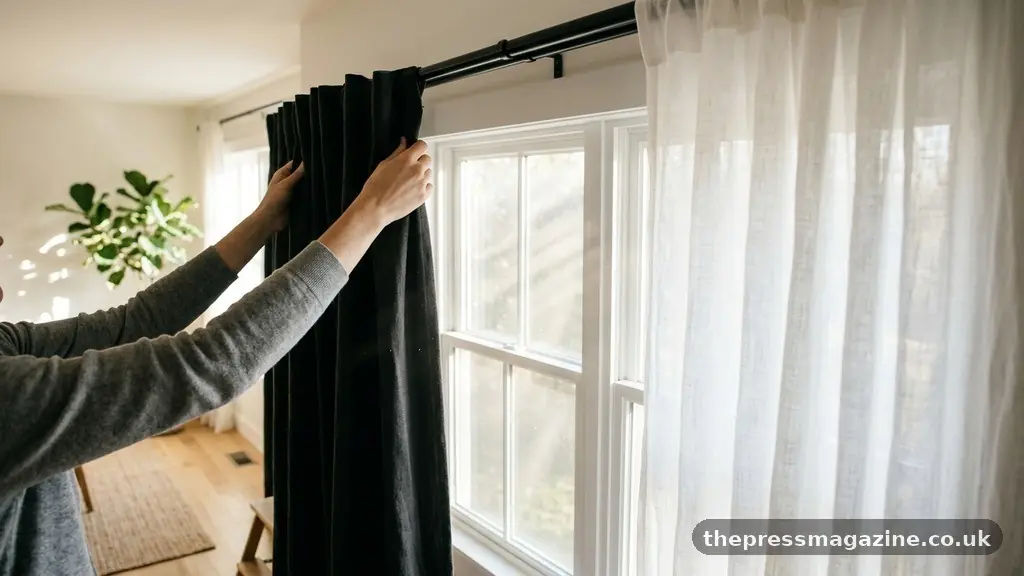
Traditional heavy drapes have their place in bedrooms and media rooms, but they can make a small window appear even smaller. If you need blackout fabric at night, pair it with a separate sheer layer so the room can receive daylight during the day.
Vertical blinds often work well for wide glass doors, particularly when the slats can draw fully to one side. Choose a pale fabric or finish, and check that the open stack does not cover a significant part of the doorway.
Smart shades can follow a schedule based on the time of day, but manual treatments may be enough for most rooms. The key is to make opening them easy; a beautiful covering that remains closed all day won’t help the room feel brighter.
| Window treatment | Best use | Daylight effect |
|---|---|---|
| Sheer curtains | Living rooms and dining areas | Diffuses light while preserving brightness |
| Translucent roller shades | Bedrooms, offices, and street-facing rooms | Softens glare with adjustable privacy |
| Blackout curtains with a sheer layer | Bedrooms and nurseries | Supports darkness at night without sacrificing daytime light |
| Wide-opening vertical blinds | Patio doors and broad glass openings | Allows the full doorway to contribute light when open |
Before replacing a treatment, watch how the sun moves across the room. Direct afternoon sunlight may call for diffusion, while a north-facing window may benefit from a treatment that opens completely and leaves every centimetre of glass available.
Use Colour and Finishes to Bounce Light
Paint cannot create daylight, but it can determine whether the available light is absorbed or reflected. Soft white, warm ivory, pale grey, light beige, and muted pastel colours generally make a dim room feel more open than deep blue, charcoal, or saturated red.
Pure white isn’t always the best answer. In a north-facing room with cool daylight, a warm off-white can prevent the walls from looking stark; in a sunny south-facing room, a slightly cooler neutral may balance the stronger warmth.
Ceilings deserve attention because they receive and redirect light from windows. A light, matte ceiling helps spread brightness without producing the distracting reflections that a high-gloss finish can create above eye level.
Flooring has a similar effect. Pale timber, light cork, cream-coloured tile, and softly finished laminate can reflect more light than very dark flooring, while a light rug can brighten a room without requiring a permanent renovation.
Kitchen and bathroom surfaces offer opportunities for controlled reflection. A glossy backsplash, pale countertop, or lightly reflective cabinet finish can make a compact room seem brighter, but balance those materials with matte textures so the result remains comfortable.
Keep the colour scheme connected rather than dividing the room into many dark blocks. When walls, trim, cabinetry, and larger furniture sit within a related light-to-medium tonal range, daylight flows visually from one surface to the next.
Paint samples should be tested on more than one wall. The same colour may look creamy near an east-facing window in the morning and grey beside a shaded wall later in the day, so observe it across several lighting conditions before committing.
Improve the Opening Without Rebuilding the Room
If a room still feels dark after simple changes, consider whether the window itself is too small or poorly positioned. Replacing a small unit with larger windows can bring in more daylight, but the new opening should be planned around wall structure, insulation, privacy, furniture placement, and the path of the sun.
Energy-efficient windows can improve comfort while increasing glazing area. Look for products suited to your climate, with appropriate insulating performance and solar-control characteristics; a larger opening is not helpful if it creates severe overheating or winter drafts.
Window orientation strongly affects the quality of light. North-facing windows usually provide steady, indirect illumination, east-facing windows receive stronger morning light, west-facing windows can produce intense afternoon glare, and south-facing windows often provide substantial daylight with seasonal variation.
Glass doors are one of the most effective ways to increase light in rooms beside a garden, balcony, or courtyard. Replacing a solid exterior door with a glazed model, or using a wider set of patio doors, can brighten both the room and the circulation area beyond it.
Privacy doesn’t require giving up glazing. Frosted lower panes, patterned films, exterior planting, internal shutters, or a transom section above eye level can preserve privacy while leaving the upper portion of the opening clear.
Check local building requirements before changing a structural opening. A contractor or structural engineer may need to assess load-bearing walls, lintels, drainage, flashing, and emergency egress, especially when the work involves a bedroom.
For a useful technical reference, the U.S. Department of Energy explains how daylighting strategies and window placement affect comfort, glare, and energy use.
Add Daylight From Above
Skylights can deliver light to the centre of a home where exterior walls are unavailable. They are particularly effective in top-floor bathrooms, stairwells, kitchens, and extensions that sit beneath a roof rather than beside a large garden-facing wall.
A roof window is generally installed within a sloped roof and may be designed to open, while a skylight can be fixed or operable and may suit a wider range of roof forms. Both options need careful detailing around the frame to prevent leaks, heat loss, and condensation.
Solar tubes, sometimes called tubular daylighting devices, are useful where a full skylight would be too large or difficult to position. A small roof dome captures daylight, a reflective tube carries it through the roof space, and a ceiling diffuser spreads it into the room below.
Because solar tubes occupy less space, they can work in hallways, wardrobes, laundry rooms, and internal bathrooms. Their output varies with weather, roof direction, tube length, and obstructions, so they provide daylight rather than a guaranteed replacement for electric lighting.
Skylight orientation and glazing choice affect summer comfort. A roof opening that receives strong midday or afternoon sun may need a shade, solar-control glazing, or an exterior screen to prevent the room from becoming uncomfortably hot.
Roof work also involves more than cutting a hole. The installer must consider roof pitch, rafters, flashing, insulation continuity, moisture barriers, and the position of mechanical equipment, so a qualified professional is important.
A simple rule helps with expectations: use roof glazing to solve a specific dark-zone problem rather than adding it merely for visual drama. A modest solar tube in a gloomy corridor may improve daily life more than an oversized skylight in a room that already receives abundant light.
Borrow Light Between Interior Rooms
Dark hallways and internal rooms often sit only a few metres from a bright space. Borrowing light through an interior opening can make the whole floor plan feel lighter without adding an exterior window.
Clerestory windows are high interior openings positioned above normal eye level. They can transfer daylight from a living room, sunroom, or roof-lit area into a hallway or kitchen while maintaining privacy and leaving wall space available for furniture.
Interior glass doors provide another route. A door with clear, reeded, fluted, or frosted glass can separate a home office, pantry, or bathroom while allowing some light to pass through.
Choose the glass pattern according to the privacy needed. Clear glass gives the strongest visual connection, reeded glass softens shapes, and frosted glass provides greater concealment but may transmit less light than a fully clear panel.
Open-plan interiors naturally share light, but removing walls isn’t always necessary or desirable. A wide cased opening, half-height partition, internal window, or glass-panelled divider can keep a room defined while reducing the visual barrier.
Light shelves can also help in rooms with tall windows. A horizontal shelf positioned to catch sunlight can reflect it toward the ceiling and deeper into the room, though its effectiveness depends on window height, exterior shading, ceiling colour, and local sun angles.
Be careful with acoustics and heat flow. A fully open connection may spread cooking smells or noise, while a glazed partition can preserve separation and still improve brightness.
Design Around Light Direction and Daily Use
Natural light isn’t static, so a room should be arranged around how it changes. A breakfast table near an east-facing window may receive pleasant morning light, while a west-facing desk could become uncomfortable during late afternoon work unless it has adjustable shading.
Window orientation can guide the placement of seating, artwork, plants, and work surfaces. Keep delicate furniture and screens out of the strongest glare zones, and use side angles rather than directly facing the glass for desks and televisions.
Light-coloured furniture near a window can help reflect daylight deeper into the room. A pale sofa or console may contribute more to the visual brightness than a dark cabinet that occupies the same position.
Plants should support, not block, the lighting plan. Choose lower-growing varieties for windowsills, prune dense foliage near the glass, and place taller plants beside the opening rather than directly in front of it.
Outdoor landscaping matters too. A tree can provide welcome summer shade, but dense evergreen planting immediately outside a window may reduce daylight throughout the year; selective pruning can preserve both privacy and brightness.
External walls and fences can also affect daylight. A pale courtyard wall or light-coloured paving can reflect useful brightness toward a window, whereas a dark boundary surface absorbs much of the available light.
Track the room over a full day before making major changes. A short observation chart can show whether the real problem is insufficient daylight, glare at one hour, a blocked lower pane, or a dark finish that makes adequate light appear weaker.
Balance Brightness With Heat, Glare, and Privacy
More daylight should make a room more pleasant, not force you to close the curtains every afternoon. Direct sun can fade timber and fabrics, create screen glare, and raise indoor temperatures, particularly through west-facing windows and roof glazing.
External shading is often more effective than internal blinds because it stops solar radiation before it reaches the glass. A retractable awning, exterior shutter, pergola, shade tree, or adjustable louvre can reduce heat while leaving the room visually bright.
Internal options still have value. Solar shades, light-filtering blinds, sheer curtains, and adjustable shutters allow you to manage specific areas without turning the entire room dark.
Use window films carefully. Some films reduce glare and ultraviolet exposure, but they can also change the appearance of the glass and may affect the manufacturer’s warranty, so confirm compatibility before installation.
Privacy solutions should match the window’s height and the surrounding view. A lower frosted band may be enough for a bathroom, while a bedroom facing a neighbouring building may need a translucent blind that covers the whole opening.
Daylight is also a biological cue, especially in rooms used early in the day. Letting morning light reach a kitchen, dining area, or sitting room can make the space feel more active, while bedrooms benefit from flexible control at night and in the early morning.
The goal isn’t maximum brightness at every hour. A comfortable room has enough natural light for its purpose, controlled contrast, manageable temperature, and privacy that doesn’t require permanent darkness.
Plan Improvements by Cost and Impact
A sensible plan starts with changes that are reversible and inexpensive, then moves toward work that affects the building envelope. This approach lets you learn how the room responds before investing in new glazing or roof alterations.
Begin by cleaning windows, moving furniture, changing curtains, and testing mirrors. Next, consider lighter finishes, a glazed interior door, or improved exterior landscaping; these projects can make a meaningful difference without changing the structure.
Major window replacement or a skylight deserves a written plan. Record the room’s orientation, dimensions, existing window size, privacy concerns, likely heat exposure, and the times when artificial lighting is currently needed.
The following comparison can help establish priorities:
| Improvement | Typical disruption | Best suited to | Planning concern |
|---|---|---|---|
| Cleaning and decluttering | Very low | Rooms with usable but obstructed windows | Maintaining the clear path of light |
| Sheer curtains or translucent shades | Low | Rooms needing privacy and softer sun | Ensuring the treatment opens fully |
| Mirrors and reflective finishes | Low to moderate | Hallways and compact rooms | Avoiding glare and reflected clutter |
| Interior glass partition | Moderate | Dark rooms beside bright spaces | Privacy and sound separation |
| Larger windows or glass doors | High | Exterior walls with limited glazing | Structure, insulation, and solar gain |
| Skylights or solar tubes | High | Central or top-floor dark zones | Roof detailing, heat, and water protection |
Costs vary widely by location, materials, access, and labour, so generic online price ranges can mislead. Ask contractors for itemised estimates that separate products, installation, structural work, finishing, electrical changes, and repairs to surrounding surfaces.
Prioritise the room you use most or the space that requires electric lighting during the day. A modest improvement in a frequently used kitchen may be more valuable than an expensive feature in a rarely occupied hallway.
Frequently Asked Questions
What is the cheapest way to make a dark room brighter?
Start by clearing the window, cleaning the glass, using curtains that open beyond the frame, and adding a well-positioned mirror. Light wall colours and a pale rug can also improve the way existing daylight is distributed without construction.
Do mirrors really increase natural light?
Mirrors don’t create additional daylight, but they can reflect light from a window into darker parts of a room. Their placement matters: a mirror facing a cluttered wall may reflect visual noise rather than useful brightness.
Are skylights better than solar tubes?
Neither is automatically better. A skylight can provide a stronger visual connection to the sky and may offer ventilation if operable, while a solar tube is often easier to fit in a narrow roof space or small internal room.
Which window direction gives the most useful light?
That depends on the room and climate. North-facing glazing often offers consistent indirect light, east-facing windows suit morning-use spaces, west-facing windows need afternoon glare control, and south-facing windows can provide strong daylight with seasonal heat considerations.
Can I add more light without replacing my windows?
Yes. Sheer curtains, reflective surfaces, lighter finishes, furniture changes, interior glazing, clerestory windows, and carefully placed mirrors can all help. If the room remains dark, a solar tube may offer more daylight without enlarging an exterior wall opening.
Make the Brightest Change First
Simple ways to bring more natural light into your home usually begin with observation rather than demolition. Clear the glass, control the window treatments, brighten nearby surfaces, and study the room at different times before deciding whether it needs larger windows, glass doors, roof windows, skylights, or solar tubes.
Choose improvements that suit the way you live, balancing daylight with privacy, heat, glare, and energy performance. One thoughtful change—such as moving a cabinet, adding a sheer curtain, or opening a dark hallway to a bright room—can make the home feel noticeably more welcoming.