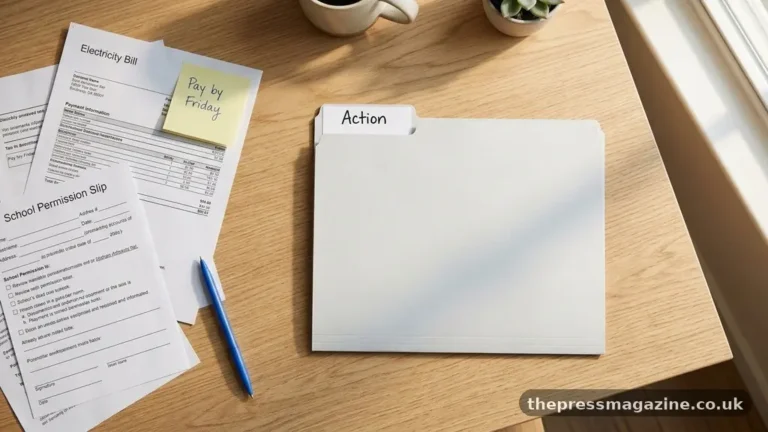
Small Daily Changes That Can Help You Feel More Organized
Small Daily Changes That Can Help You Feel More Organized often begin with one visible surface, one reliable routine, or one decision made before the day becomes noisy. You don’t need a color-coded life or a perfect productivity system to feel more in control. A few repeatable actions can reduce searching, forgotten commitments, and the mental effort of deciding what comes next.
The most useful changes are small enough to continue on a busy Tuesday, not just on a highly motivated Monday. Start with one habit, attach it to something you already do, and let consistency do the heavy lifting.
Start With One Small Control Point
The fastest way to feel more organized is to choose one part of the day that will run predictably. For many people, that control point is the first ten minutes after waking, the moment they begin work, or the final ten minutes before bed.
Don’t try to repair every messy system at once. Choose a single question to answer consistently: What must happen today?
Where do important items belong? What needs to be ready for tomorrow?
A useful first step is writing a short to-do list with no more than three priority tasks. Three meaningful outcomes are easier to remember and finish than a sprawling list of fifteen intentions, especially when interruptions are likely.
Task prioritization becomes clearer when each item has a reason attached to it. “Email Sam” is vague, while “Email Sam to confirm Friday’s appointment” tells you what done looks like and prevents you from reopening the decision later.
Try a control-point routine such as this:
- Write the three outcomes that matter most.
- Check the calendar for fixed appointments and travel time.
- Choose the first physical action for the top task.
- Put essential items in one visible or designated location.
- Remove one distraction before starting.
This process may take five minutes, but it creates a bridge between planning and action. You’re not merely recording obligations; you’re deciding what deserves attention before other people’s requests fill the space.
Keep the system in one place at first. A paper notebook, a notes app, or a calendar can work, but scattering commitments among text messages, sticky notes, email drafts, and memory makes the system harder to trust.
The goal isn’t to make every day identical. It’s to create one dependable landing place for decisions, so your brain doesn’t have to reconstruct the day from scraps.
Build Routines Around Existing Habits
New habits are easier to remember when they follow an action that already happens. This method, commonly called habit stacking, turns an established behavior into a prompt for a small organizing task.
For example, after brushing your teeth, you might check tomorrow’s calendar. After making coffee, you could review the day’s top priority. After plugging in your phone at night, you might place your keys and wallet in their designated storage spot.
The existing habit acts like an alarm that doesn’t require another notification. That matters because reminders and notifications can become background noise when there are too many of them.
A practical morning routine doesn’t need to include a long meditation, an elaborate breakfast, and an hour of planning. It might simply involve checking the weather, reviewing appointments, filling a water bottle, and deciding which task should receive your freshest attention.
Your evening routine can be equally brief. Spend a few minutes returning objects to their homes, checking the next day’s commitments, and writing down anything that would otherwise keep circling in your mind.
Make the action easy to begin

The first version should feel almost too easy. If “organize the kitchen” feels overwhelming, define the action as “clear the counter beside the kettle” or “put five items away.” A clear starting point reduces the friction that often gets mistaken for laziness.
Use visible cues where they help. Leave the notebook beside your laptop, place the library book near the door, or keep a small basket beside the stairs for items that belong upstairs.
These cues work because they connect the environment to the behavior. You won’t need to remember every intention if the object itself reminds you what to do.
It also helps to protect routines from perfectionism. Missing one evening review doesn’t cancel the habit; simply resume the next night without creating a punishment plan that makes the routine harder to approach.
Separate planning from judging
A routine should help you see the day clearly, not criticize you for having limits. If your list repeatedly contains more than you can complete, the solution may be better estimating, fewer commitments, or clearer delegation rather than greater effort.
Keep a “later” list for tasks that matter but don’t belong in today’s work. This prevents lower-urgency ideas from competing with appointments, deadlines, meals, rest, and other fixed needs.
Small daily changes become sustainable when they respect real energy levels. A routine that works only on your best day is an aspiration, not yet a dependable system.
Use Time Blocking Without Overplanning
Time blocking means assigning a task or type of activity to a defined period on your calendar. It can make an open-ended day easier to understand because you’re choosing when work happens instead of hoping time will appear.
Start with fixed commitments. Add work hours, classes, medical appointments, school pickup, meals, and necessary travel before placing flexible tasks into the remaining spaces.
Then reserve a realistic block for your most important task. If a report usually takes an hour, don’t squeeze it into a twenty-minute gap between two calls and label the failure a discipline problem.
Good calendar planning includes recovery space. A ten-minute buffer after an appointment may absorb a late bus, a longer conversation, or the simple need to switch mental gears.
Use broad categories rather than minute-by-minute instructions. A morning block for focused work, an afternoon block for communication, and a short administrative block may be more useful than assigning every five-minute interval.
| Planning approach | Useful for | Common risk | Small adjustment |
|---|---|---|---|
| Fixed appointments first | Protecting non-negotiable commitments | Leaving flexible work until too late | Add one priority block immediately afterward |
| Three daily priorities | Reducing an oversized to-do list | Underestimating task time | Define the next physical action |
| Theme-based blocks | Reducing context switching | Making categories too broad | Name a concrete outcome for each block |
| Buffer periods | Handling delays and transitions | Treating buffers as spare work time | Keep them open unless genuinely needed |
When a block ends, record what remains rather than carrying an anxious, undefined task in your head. “Finish introduction, check figures, send draft” is more useful than “work on project.”
Time blocking should support your attention, not turn the calendar into a courtroom. If unexpected care, work, or household demands interrupt the plan, move the block and keep the larger priority visible.
For people who dislike strict schedules, use soft blocks. Mark a period as “possible errands” or “home reset” instead of assigning one exact activity, while still giving that time a purpose.
Make Your Physical Space Easier to Reset
Organization becomes easier when objects have clear homes. Designated storage reduces the number of decisions required after use, because you don’t have to invent a location each time you put something away.
Choose locations based on where an item is actually used. Charging cables belong near the places devices are charged, not in a drawer across the home that nobody wants to open at night.
Likewise, keep everyday shoes near the entrance, cooking tools close to the counter where they’re used, and paperwork in a single inbox rather than on every available surface.
Decluttering works best when it is specific and limited. Instead of promising to declutter the whole bedroom, choose one drawer, one shelf, or the floor around one piece of furniture.
Use the five-minute rule
The five-minute rule gives a small task a clear boundary: work on it for five minutes, then decide whether to continue. This is particularly helpful for dishes, inbox cleanup, laundry sorting, and documents that feel mentally heavier than they are physically difficult.
Five minutes may be enough to throw away expired receipts, place loose pens in a container, or gather items that belong in another room. Even when the job remains unfinished, the starting barrier is lower and the next action is easier to see.
Set a timer if you tend to turn small resets into unplanned cleaning marathons. Stopping on time teaches your brain that organization doesn’t always demand a whole free afternoon.
Design for return, not display
A storage system should make putting things away nearly as easy as taking them out. If a frequently used item requires opening a box, moving three objects, and reaching behind a door, it will probably remain visible.
Open baskets, hooks, trays, and clearly labeled containers can help with high-use items. The best choice depends on the object and the people using the space, but accessibility matters more than visual perfection.
At the end of the day, perform a short reset in one high-traffic area. Returning the entryway, kitchen counter, or work surface to a usable state can make the next morning feel noticeably less demanding.
Reduce Digital Friction
Digital organization deserves the same attention as physical clutter. An overflowing inbox, crowded desktop, and unexamined notification list can create a constant sense of unfinished business even when the room is tidy.
Begin with one digital location. Decide where appointments live, where task reminders belong, and where reference documents should be stored.
Productivity apps can be useful when they reduce remembering, but adding another platform won’t fix unclear decisions. Before downloading a new tool, ask whether it solves a specific problem such as recurring reminders, shared grocery lists, or project deadlines.
Turn off notifications that don’t require immediate action. A message arriving does not automatically mean it deserves attention in the next thirty seconds.
Keep alerts for genuinely time-sensitive matters, such as a scheduled medication reminder or a meeting beginning soon. Batch less urgent messages into one or two review periods so every vibration doesn’t interrupt focused work.
Create simple digital homes
Use consistent names for files and folders. A document titled “2025-03-15 Insurance renewal” is easier to find later than one called “scan final new,” especially when several versions exist.
Keep the desktop for temporary work rather than permanent storage. Once a project is finished, move its files into a named folder and delete duplicates that no longer serve a purpose.
Email can follow a similar rule. Archive messages that require no action, flag only items with a clear next step, and convert commitments hidden in messages into calendar entries or tasks.
Digital decluttering is more manageable when scheduled in short sessions. Ten minutes on Friday can be enough to rename recent files, clear downloads, and remove obsolete screenshots.
Protect important information before making sweeping changes. Back up meaningful photos, records, and work files so organization doesn’t create an avoidable loss.
Choose Priorities Before the Day Chooses Them
Many disorganized days are not caused by a lack of effort; they are caused by competing priorities with no agreed order. Task prioritization gives each request a place relative to deadlines, consequences, energy, and importance.
One simple method is to divide tasks into three groups: must happen today, should happen soon, and could happen later. The categories don’t need to be perfect; they only need to prevent every item from appearing equally urgent.
Ask what happens if a task moves by one day. If the answer is “nothing important,” it may not belong in the first group, even if it is easy to complete or someone sent a reminder.
Another useful question is whether the task is truly yours. Delegating a household errand, asking a colleague for missing information, or declining a low-value commitment can create more order than rearranging your list.
Turn intentions into next actions
Large tasks create confusion because they contain several decisions. “Prepare for the trip” might involve checking dates, making a packing list, washing clothes, arranging transport, and confirming accommodation.
Write the next visible action instead. “Open the booking email and record the check-in time” gives you a place to begin.
For recurring responsibilities, create a short checklist. A departure checklist can include keys, wallet, charger, medication, and water, while a weekly work checklist might include reviewing deadlines, sending follow-ups, and clearing the shared inbox.
Checklists are especially useful for tasks that are familiar but easy to forget under pressure. They preserve attention for judgment rather than making you repeatedly remember basic steps.
Protect capacity
A calendar full of tasks is not proof of a well-organized day. If there is no time for meals, transitions, rest, or unexpected events, the plan is already over capacity.
Estimate your available energy, not just your available hours. A demanding analytical task may belong earlier in the day, while routine filing or errands may fit better during a lower-energy period.
Leave at least one small space unclaimed when possible. That margin can absorb a delayed appointment or give you enough breathing room to finish without rushing into the next commitment.
Review the Week and Adjust the System
A daily plan handles immediate decisions, while a weekly review helps you notice patterns. Set aside a consistent time to look at unfinished tasks, upcoming commitments, household needs, and any deadlines that have changed.
Begin by checking the calendar for the next seven days. Look for preparation tasks that need to happen earlier, such as buying ingredients before a dinner, preparing documents before an appointment, or charging equipment before travel.
Next, review unfinished items without self-criticism. Reassign each one, break it into a smaller action, schedule it, delegate it, or remove it if it no longer matters.
Repeatedly postponed tasks are useful information. If “book dentist appointment” has survived three weekly reviews, the barrier may be uncertainty about insurance, limited calling hours, or a dislike of phone calls.
Address the barrier directly. Find the online booking page, add a reminder for the office’s opening time, or write the exact question you need to ask.
A weekly review can also reveal where clutter accumulates. If papers always collect beside the front door, the system may need an inbox there rather than another reminder to be tidier.
Keep the review short enough to repeat. A practical sequence might include:
- Check the next week’s calendar and travel time.
- Choose important preparation tasks.
- Move or remove unfinished commitments.
- Restock household essentials.
- Identify one system that needs adjustment.
Write down the adjustment and test it for a week. You might move the laundry basket, change the time of your planning session, or combine two reminders that are currently creating unnecessary noise.
Organization is an ongoing experiment. Systems become stronger when they respond to actual behavior instead of an imagined version of how life should work.
Make Organization Support Your Well-Being
Feeling organized is not only about completing more tasks. A clear plan can lower the number of open loops competing for attention, leaving more room for rest, relationships, and work that matters.
That doesn’t mean every difficult feeling can be solved by a tidy desk or a better app. Stress, sleep problems, grief, health concerns, and financial pressure may require support beyond household routines.
Small structure can still make stressful periods more manageable. Writing down appointments, preparing essentials the night before, and limiting unnecessary decisions can preserve energy when your attention is already stretched.
The American Psychological Association’s advice on managing stress also emphasizes practical habits such as regular movement, healthy routines, connection, and noticing what is within your control. Organization works best as one part of that wider support, not as a demand to perform perfectly.
Leave room for human days
Some days will include illness, bad news, urgent care, or a child who needs more help than expected. On those days, the most organized choice may be reducing the list to food, medication, essential communication, and rest.
Create a “minimum day” version of your routines. It might mean clearing one surface, checking tomorrow’s most important appointment, and placing the essentials by the door.
This keeps the habit alive without pretending that every day offers the same capacity. A flexible system is more dependable than one that collapses whenever circumstances change.
Notice the emotional benefit of small completion. Finishing one concrete action can restore a sense of movement, especially when larger problems cannot be solved immediately.
Use encouragement that is factual rather than inflated. “I prepared my clothes and checked the calendar” is a grounded observation, and grounded observations build trust in your own systems.
FAQ: Building More Organized Days
What is the best small change to start with?
Choose one daily control point and make it repeatable. Checking tomorrow’s calendar during your evening routine or writing three priorities after breakfast usually creates more benefit than starting five new habits at once.
How many tasks should be on a daily to-do list?
There is no universal number, but three meaningful priorities are a practical starting point. Add smaller tasks only after accounting for fixed appointments, travel, meals, interruptions, and the time your main work actually requires.
What should I do if I keep abandoning routines?
Reduce the routine until it fits your least demanding version of a normal day. Attach it to an existing habit, prepare the necessary materials in advance, and track whether the cue is reliable rather than blaming yourself for a missed repetition.
Are productivity apps necessary for staying organized?
No. A notebook and calendar may be enough if they are easy to access and you review them consistently. Use an app only when it provides a clear function, such as shared planning, recurring reminders, or a searchable record.
How can I organize my home without spending an entire weekend?
Use the five-minute rule on one defined area, then stop or continue by choice. Give frequently used objects designated storage near their point of use, and focus on making items easy to return rather than creating a display-perfect room.
Keep the Next Step Small
Small Daily Changes That Can Help You Feel More Organized work because they reduce friction without requiring a complete life overhaul. Pick one action today: write tomorrow’s top priority, clear one surface, or place an essential item where you’ll find it easily.
After a week, notice what made the day lighter and keep that piece. Let the system grow from real experience, with enough flexibility for busy days, low energy, and ordinary human interruptions.