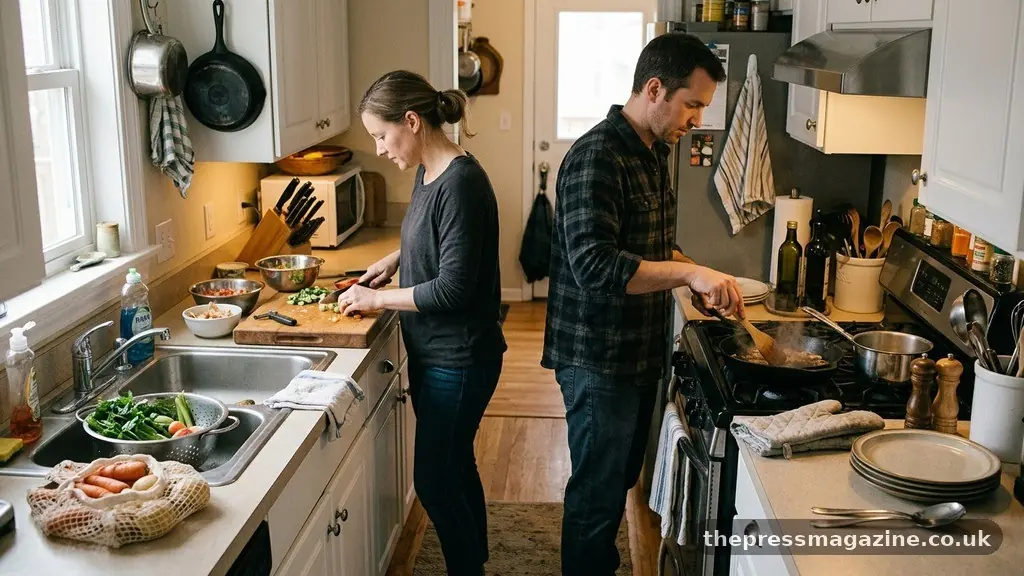
How to Make Your Kitchen More Practical for Daily Cooking
Making Your Kitchen More Practical for Daily Cooking starts with reducing the small delays that interrupt every meal: searching for a knife, clearing a crowded counter, or walking across the room for a pan. A practical kitchen supports the way you actually cook, whether that means quick breakfasts, packed lunches, family dinners, or batch cooking on weekends.
The best improvements usually come from better kitchen workflow rather than expensive renovation. By arranging storage, lighting, tools, and work surfaces around your habits, you can make meal preparation calmer, faster, and more enjoyable without changing the room’s entire footprint.
Start With the Way You Cook
The first answer to making a kitchen more useful is simple: organise it around repeated actions, not around how the cabinets happened to be installed. Spend two or three days noticing what slows you down, where you naturally place ingredients, and which items you reach for during nearly every meal.
Write down recurring friction points. Perhaps the chopping board has no clear landing spot, spices are hidden behind tall bottles, or the bin is too far from the food prep zone. These observations are more valuable than copying a showroom layout because they reveal your personal kitchen workflow.
Map the daily sequence
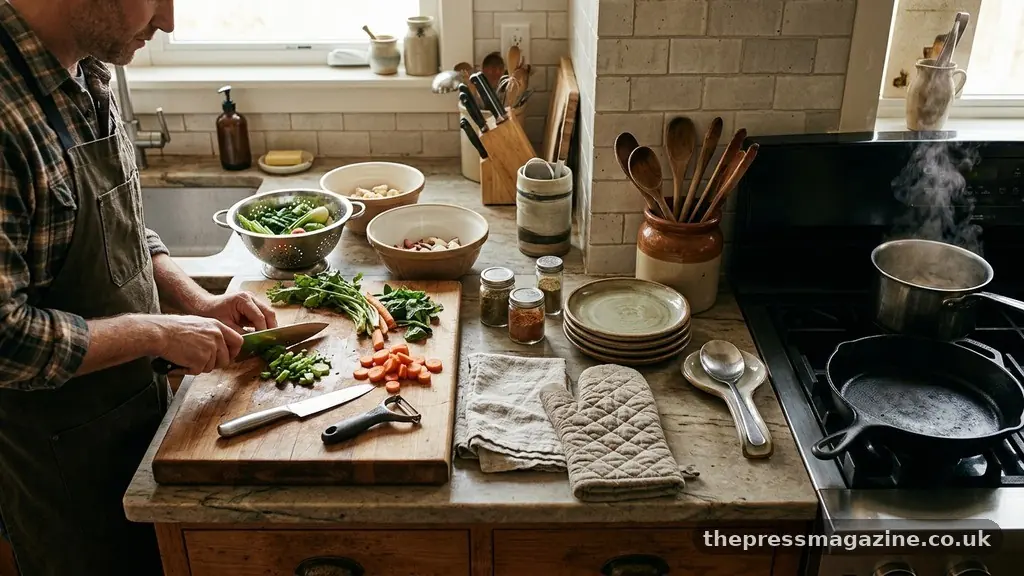
Most cooking follows a loose chain: collect ingredients, wash them, prepare them, cook them, serve them, and clean up. Arrange nearby items so each stage can flow into the next instead of forcing you to cross the room repeatedly.
For example, keep knives, a board, mixing bowls, and peelers near the main preparation surface. Store frying pans and saucepans close to the cooking zone, while plates, serving spoons, and oven gloves should be easy to grab without opening several cabinets.
Use a quick audit to identify the items that deserve prime storage:
- Frequently used utensils: spatulas, wooden spoons, tongs, a chef’s knife, and a vegetable peeler.
- Daily ingredients: cooking oil, salt, pepper, tea, coffee, breakfast foods, and commonly used grains.
- Heavy equipment: cast-iron pans, Dutch ovens, stand mixers, and food processors.
- Cleaning essentials: dish soap, cloths, a brush, dishwasher tablets, and bin liners.
- Serving items: everyday plates, bowls, glasses, and cutlery.
Anything used several times a day should not be stored in a high cupboard or at the back of a deep shelf. Less-used equipment can occupy higher cabinets, a utility cupboard, or a labelled box elsewhere.
Test before buying
Before purchasing organisers, use temporary solutions such as baskets, cardboard dividers, or painter’s tape to mark new zones. This trial lets you check whether a proposed arrangement feels natural during real cooking rather than merely looking tidy when the kitchen is empty.
Keep a short note of what still feels awkward after a week. A practical kitchen is not created in one afternoon; it develops through small adjustments based on actual use.
Create Clear Work Zones
A kitchen becomes easier to use when each major task has a defined location. The classic work triangle connects the refrigerator, sink, and cooker, but modern kitchens often work better as several activity zones because multiple people may be preparing food at once.
The most useful arrangement usually includes a food prep zone, a cooking zone, a cleaning zone, and a storage zone. These areas can overlap in a small room, yet each should have the tools and supplies needed for its main purpose.
Build the food prep zone
Place your largest uninterrupted section of countertop between the refrigerator and sink if possible. This gives you somewhere to unload groceries, rinse produce, chop ingredients, and assemble dishes without balancing a board over the sink.
Keep a knife block or magnetic strip, cutting boards, mixing bowls, colanders, and measuring tools within a short reach. If children or other household members help with cooking, leave enough open space for another person to work safely beside you.
Support the cooking zone
The cooking zone should contain the hob or cooker, pans, trivets, utensils, oils, and seasonings used during heating. Store these items in the nearest drawers or cabinets rather than making yourself carry hot cookware across the room.
A shallow drawer beside the hob can hold wooden spoons, tongs, whisks, and turners. Heat-resistant gloves or oven mitts should be close enough to grab immediately, but not so close to a flame or hot surface that they become a fire risk.
Keep cleaning contained
The cleaning zone generally centres on the sink and dishwasher. Dish soap, scrubbers, dishwasher detergent, and drying cloths should be accessible without spreading them across the whole countertop.
Try to leave a small clear area beside the sink for items waiting to be washed or loaded. Separating dirty dishes from the main prep surface makes meal preparation feel more orderly and reduces the chance of raw-food contact with clean equipment.
When space is limited, zone boundaries can be created with simple choices: a tray for oils, a container for utensils, or a dedicated drawer for prep tools. You do not need a large kitchen to create a logical sequence.
Improve Storage Without Creating Clutter
Good kitchen storage solutions make the right item easy to find while preventing cabinets from becoming crowded holding areas. The aim is not to fill every shelf; it is to reduce wasted movement and make the contents visible.
Begin by removing duplicates and items you have not used in the past year, unless they serve a specific seasonal or specialist purpose. Three nearly identical peelers take up valuable space, while one reliable peeler kept near the prep area is more useful.
Make cabinets easier to reach
Deep lower cabinets often hide small appliances and stacks of cookware behind one another. Pull-out shelves, sliding baskets, and cabinet organizers can bring those items forward, allowing you to see the entire space without kneeling and reaching into the back.
Use vertical dividers for baking trays, chopping boards, and cooling racks. This arrangement is safer and more efficient than stacking flat items, particularly when you need the tray at the bottom of a pile.
For upper cabinets, keep lightweight and frequently used goods between eye and shoulder height. Heavy dishes should stay in lower storage where possible, reducing strain and limiting the risk of dropping them.
Organise drawers by movement
Drawer dividers are especially useful for cutlery, measuring spoons, peelers, and small tools that otherwise become tangled. Choose compartments that fit the actual contents rather than forcing every drawer into a standard grid.
Place everyday cutlery near the dishwasher or unloading area if that shortens the process of putting it away. Cooking utensils belong near the hob, while serving tools may be more convenient beside plates and bowls.
Strengthen pantry organisation
Pantry organization works best when similar foods are grouped by use rather than alphabetically. Keep breakfast foods together, place baking ingredients in one area, and group pasta, rice, grains, and sauces where you can compare them quickly before shopping.
Clear containers can help with staples, but they are not essential. Labels on opaque bins or shelf edges can provide the same visibility without requiring you to decant every packet.
Use a first-in, first-out habit for dry goods: move older items to the front after unpacking groceries. A small inventory list on the pantry door can also prevent buying a fourth bag of rice while an opened one sits behind the cereal.
Choose Tools That Earn Their Space
Practical kitchens are not defined by the number of gadgets they contain. They work because the tools available match the meals prepared most often and are easy to clean, store, and use.
Review small kitchen appliances by frequency and function. A blender that makes breakfast smoothies every morning deserves convenient access, while a specialist machine used twice a year may be better stored on a high shelf or outside the kitchen.
Prioritise versatile equipment
A chef’s knife, a stable cutting board, a medium saucepan, a large skillet, a sheet pan, measuring tools, and a reliable colander cover a wide range of home cooking tasks. These basics support vegetables, grains, sauces, eggs, roasted food, and one-pan meals without filling every cabinet.
Choose equipment that performs several jobs when possible. A Dutch oven can sear, simmer, bake, and serve, while a lidded sauté pan may replace several specialised pans for everyday dishes.
Do not keep an appliance on the counter simply because it is expensive. Countertop organization improves when only the equipment used regularly remains visible, with the rest assigned a clearly labelled storage location.
Make preparation faster
Keep measuring cups, a kitchen scale, mixing bowls, and food storage containers near the main prep surface. Grouping these items reduces the repeated opening and closing of cabinets during baking or batch cooking.
If you often prepare vegetables in advance, store a lidded container, salad spinner, and reusable bags near the refrigerator. The best arrangement reflects your menus: a bread baker needs different access points from someone who mainly cooks stir-fries or soups.
Review tools after a month rather than judging them immediately. An item that seemed useful may prove awkward to wash or too large for your routine, while an inexpensive tool may become indispensable because it removes a repeated nuisance.
Use Lighting and Ergonomics to Reduce Strain
Kitchen lighting affects more than appearance. Shadows over a chopping board make it harder to see food clearly, while glare on a worktop can make reading measurements or checking browning uncomfortable.
Layer the light where tasks happen. General ceiling lighting provides overall visibility, under-cabinet lights illuminate the worktop, and a focused fixture above an island or table can support preparation and serving.
Brighten the work surface
Under-cabinet lighting is particularly valuable over the food prep zone because wall cabinets can cast shadows from behind you. Choose lighting that makes ingredients look natural and position it toward the front of the cabinet so the countertop receives direct illumination.
Keep switches easy to reach, especially if your hands are wet or covered with flour. Motion sensors can be useful for pantry or under-cabinet areas, although manual controls may be preferable where lights could activate unnecessarily.
For food safety information on handling and preparation, the USDA food safety guidance is a dependable reference. Good lighting supports those habits by helping you inspect produce, surfaces, and cooked food more accurately.
Make movement comfortable
Ergonomic kitchen design means reducing unnecessary bending, stretching, twisting, and lifting. Frequently used items should sit between waist and shoulder height, while the heaviest cookware belongs in a position that does not require reaching overhead.
Leave enough clearance for doors and drawers to open without blocking the main route. If two people cook together, check whether one person can access the refrigerator while another stands at the sink or hob.
A comfortable anti-fatigue mat can help during long preparation sessions, but it should lie flat and stay clear of cabinet doors. Comfort improvements matter most when they address a repeated physical demand rather than adding another object to manage.
Make Cleaning Part of the Workflow
A kitchen feels more practical when cleaning is built into the cooking process instead of postponed until every surface is covered. Small resets between stages prevent preparation tools, packaging, and scraps from competing for the same counter.
Keep a bowl or container beside the chopping board for vegetable ends, wrappers, and compostable scraps. This simple habit reduces trips to the bin and keeps the worktop clearer while you prepare ingredients.
Reduce washing-up
Use one board for produce and another for raw meat if your household prepares both, and wash tools as soon as they are no longer needed. A pan that needs soaking should be dealt with before food residue dries and becomes harder to remove.
Choose cookware with smooth, accessible surfaces when buying replacements. A pan that cooks well but takes excessive scrubbing every evening may cost more time than its performance justifies.
Store cleaning products where they are useful but separate from food. A narrow caddy beneath the sink can hold brushes, cloths, and detergent, while a small counter container can keep one frequently used cloth available without spreading bottles everywhere.
Protect surfaces and equipment
Wipe spills promptly, especially around the hob and refrigerator handles. Dried oil and sauce require more effort later and can make handles unpleasant to touch during the next cooking session.
Use trivets or heat-resistant pads in a predictable location so hot pans do not land on unprotected countertops. Keep a few durable cloths within reach, but avoid piling them near the cooker where they could contact heat.
At the end of the day, aim for a short reset rather than an idealised deep clean. Clear the main prep surface, load or wash essential dishes, return tools to their zones, and check that the sink is ready for the next morning.
Improve the Kitchen in Affordable Stages
You do not need to renovate the room to improve daily cooking. The most valuable changes often involve relocating existing objects, removing unused items, and adding one carefully selected organiser at a time.
Start with the most repeated inconvenience. If you cannot reach pans, test a vertical rack; if spices disappear, use a shallow shelf or drawer insert; if the counter is always crowded, relocate rarely used small kitchen appliances before buying more storage.
Use a staged plan
During the first week, observe and record delays. During the second, declutter and move items into provisional zones. Only after that should you measure cabinets and buy organisers, because the trial period shows what the kitchen actually needs.
A useful order of priority is:
- Clear the main preparation surface.
- Move daily tools close to their point of use.
- Improve access to deep or crowded storage.
- Correct poor kitchen lighting over work areas.
- Replace awkward equipment only after testing the layout.
Measure cabinet width, depth, and door clearance before ordering pull-outs or bins. A product that fits the shelf but prevents the door from closing is not a storage solution; it is a new obstruction.
Compare improvements by impact
| Kitchen problem | Low-cost adjustment | When a larger change may help |
|---|---|---|
| Crowded prep counter | Relocate rarely used appliances and use a tray for oils | Add a movable cart or install a wider work surface |
| Hard-to-reach pans | Use a vertical rack or rearrange cookware by frequency | Install pull-out shelves in a deep cabinet |
| Dark chopping area | Add a suitable under-cabinet light | Rework fixed lighting during a renovation |
| Messy utensil drawer | Fit adjustable drawer dividers | Replace a shallow drawer with a deeper, better-positioned one |
| Slow grocery unpacking | Group pantry staples and label storage areas | Create a dedicated pantry or tall cabinet |
Set aside a modest improvement budget for items that solve a verified problem, not for attractive accessories that duplicate what you already own. A single pull-out shelf or well-placed light can make more difference than a collection of decorative containers.
FAQ About a More Practical Cooking Space
What is the most important change for a small kitchen?
Clear and protect one reliable preparation surface. Even a compact counter becomes useful when knives, boards, bowls, and the most-used ingredients are nearby and unrelated appliances are stored elsewhere.
Does the work triangle still matter?
Yes, but it is a planning reference rather than a strict rule. In an open-plan or multi-cook kitchen, separate food prep, cooking, cleaning, and storage zones may work better than focusing only on the distance between the refrigerator, sink, and cooker.
How should frequently used utensils be stored?
Keep them in a shallow drawer beside the cooking zone, in a secure container, or on a rail where they are protected from heat and splashes. Avoid placing every utensil in a countertop crock if that creates clutter around the main work area.
What should be stored on the countertop?
Keep only items used often enough to justify their footprint, such as a kettle, coffee machine, or appliance used most days. Everything else should have a defined cabinet, pantry, shelf, or utility storage location.
How can renters improve their kitchen without renovating?
Use removable lights, freestanding carts, adhesive hooks suited to the surface, shelf risers, drawer dividers, and labelled bins. Before adding anything, test the arrangement with temporary containers so the solution remains practical and does not interfere with doors, walkways, or ventilation.
Keep the Improvements Useful
Making Your Kitchen More Practical for Daily Cooking is mainly an exercise in reducing friction. Observe your real routines, place tools beside the tasks that use them, protect a clear preparation surface, and improve storage only where a problem has been identified.
Begin with one zone this week, then reassess after several meals. A kitchen that supports your habits will feel calmer and more capable, and small changes can keep delivering value long after the initial organising is finished.