Everyday Habits That Can Make Your Home Feel More Organized
Everyday Habits That Can Make Your Home Feel More Organized are usually small, repeatable actions rather than ambitious weekend projects. Returning keys to one place, clearing the kitchen counter after dinner, and processing the day’s mail before it spreads can change how a room feels within minutes.
The most useful approach is to match each item with a clear home and connect simple tasks to routines you already follow. These practical habits reduce visual noise, prevent clutter from travelling through the house, and make tidying feel manageable even during busy weeks.
Start With Small Daily Resets
The direct answer is simple: make a few high-impact areas easier to reset every day, and give commonly used belongings designated storage spaces. A daily reset routine works best when it takes about 10 to 15 minutes and focuses on restoring order rather than deep-cleaning the whole home.
Choose a consistent time, such as just before bed or immediately after dinner. During that window, return loose items to their homes, collect cups and dishes, straighten cushions, and deal with anything that is clearly out of place.
Think of the reset as closing open loops. A pair of shoes left in the hallway, a charger on the sofa, and yesterday’s paperwork on the table each create a small visual demand, even if none of them is difficult to move.
One useful sequence is to carry a basket from room to room. Place misplaced objects inside it, then put everything away in one final pass so you don’t repeatedly walk back and forth.
Keep the routine narrow enough to maintain on a tiring day. A reset that includes every cupboard, baseboard, and laundry basket will feel like a cleaning project and become harder to repeat.
- Clear the main table or kitchen island.
- Return remote controls, books, shoes, and chargers to their assigned spots.
- Load or wash dishes and wipe the most visible counter.
- Put dirty clothes in the hamper instead of leaving them on the floor.
- Prepare one item for the next morning, such as a bag, lunch container, or coat.
Habit stacking makes this easier because it attaches a new behaviour to something already reliable. For example, you might reset the living room while the kettle boils, sort the mail after taking off your shoes, or wipe the kitchen counter while coffee brews.
The aim isn’t a spotless home at every moment. It’s a home that can return to a comfortable baseline without requiring a major rescue operation.
Make the Entryway Work Harder
Entryway organization has an outsized effect because the entrance is the first place you see when you come home. If shoes, bags, coats, and receipts land wherever there is space, that disorder quickly spreads into adjoining rooms.
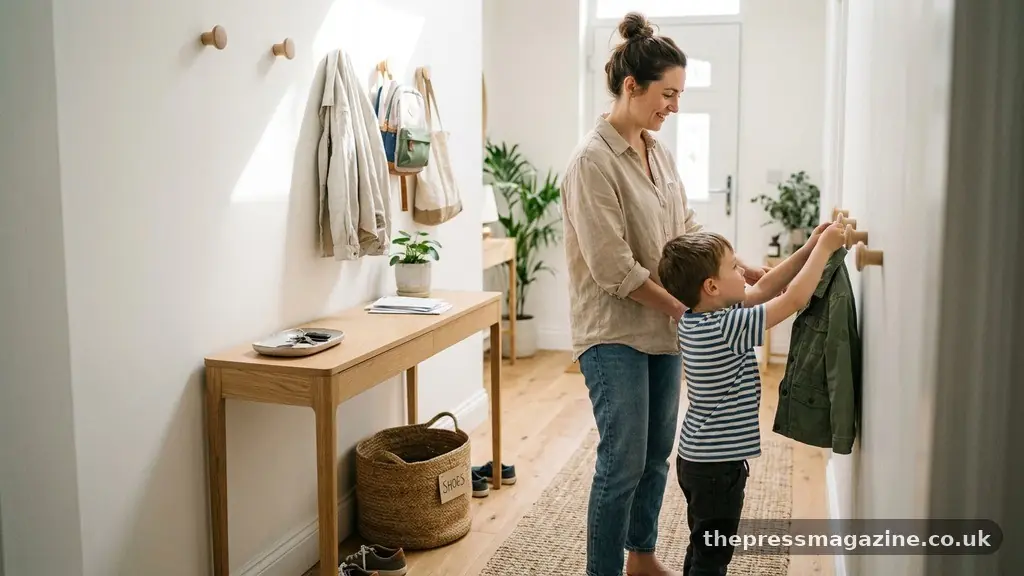
Start by assigning one location for each category. Hooks can hold daily coats and bags, a tray can collect keys, and a shoe rack or low cabinet can keep footwear from forming a pile beside the door.
Storage should match the way your household enters the home. If people drop bags on the floor, a closed cupboard may be less useful than sturdy hooks placed at a convenient height.
Limit the entryway to items used regularly. Seasonal coats, formal shoes, and extra umbrellas can move to a wardrobe or closet, leaving the front door area available for everyday traffic.
A small landing station can prevent paper clutter from travelling further. Put incoming letters in one upright file or tray, then process them during a set time instead of allowing envelopes to collect on the nearest surface.
Keep a donation box somewhere accessible but not in the walking path. When a coat no longer fits or a bag stops being useful, it can go directly into the box rather than returning to the closet.
Use a Two-Minute Arrival Routine
As soon as you enter, put keys in the same tray, hang up your coat, and place your bag where it belongs. The routine should take less than two minutes, but repeating it prevents the entrance from becoming a temporary storage room.
Children can follow a simplified version with one hook, one basket, and one shoe space. Clear labels or pictures may help younger children understand where each item goes without needing repeated reminders.
Once a week, inspect the area for objects that do not belong there. A stray parcel, old receipt, or pair of shoes waiting for repair should be moved, handled, or removed rather than becoming part of the background.
Protect Clear Surfaces
Open surfaces strongly influence whether a room appears organized. A dining table covered with unopened mail and school materials may make the entire home feel unsettled, even if drawers and cupboards are reasonably tidy.
Choose one or two surfaces to protect every day. Kitchen counter cleanup is a useful starting point because the counter is often used repeatedly and tends to collect food packaging, appliances, dishes, and miscellaneous objects.
Begin by removing items that do not belong in the kitchen. Then group the remaining items by action: wash, put away, recycle, file, or return to another room.
Do not aim to clear every appliance if that would make cooking inconvenient. Instead, decide which tools deserve permanent counter space and which can be stored nearby but out of sight.
A tray can contain frequently used oils, spices, or coffee supplies without allowing them to spread across the entire worktop. The boundary matters because it gives loose objects a visible limit.
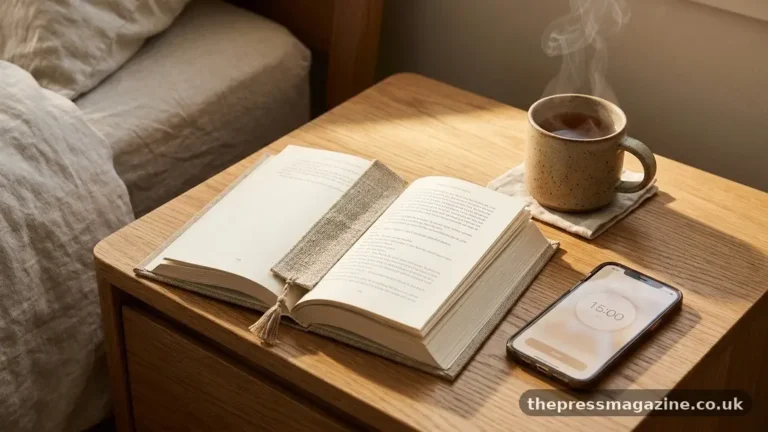
The same principle works in a bedroom or living room. A bedside table might hold a lamp, a book, and a glass of water, while excess cables, receipts, and cosmetic products move to drawers or a small container.
Finish One Task Before Starting Another
Many clutter piles begin with unfinished transitions. A parcel is opened but not broken down, clean laundry is moved to a chair but not folded, or a craft project is left on the dining table without a container.
Try completing the final step whenever possible. Flatten the box immediately, return scissors to the drawer, and put folded clothes in the wardrobe rather than creating a new staging area.
If a task must remain unfinished, use a defined project basket. That keeps the materials together and makes the unfinished work look intentional instead of scattered across several surfaces.
Give Every Category a Practical Home
Decluttering becomes more sustainable when the belongings you keep have realistic storage locations. An item without a home will continue to appear on counters, floors, and chairs because the household has no clear decision to follow.
Organize by category rather than by the room where an item happens to be found. Batteries, cables, spare light bulbs, and small tools may be used in different rooms, but storing each category together makes them easier to locate.
Designated storage spaces should be close to the point of use. Cleaning products used in the bathroom can stay in a bathroom cupboard, while frequently used cooking utensils should not require a complicated trip to a distant pantry.
Use drawer dividers for small items that otherwise become mixed together. They are especially useful for cutlery, stationery, cosmetics, cables, and household tools.
Labeled containers help when several bins look alike or when more than one person uses the storage area. Labels should describe the contents plainly, such as “pet supplies,” “winter accessories,” or “spare chargers.”
Vertical storage can create useful capacity without spreading possessions across the floor. Wall hooks, tall shelving, pegboards, and over-door organizers can hold items that are awkward to stack.
Be cautious with storage products, though. Buying containers before deciding what to keep can make clutter look tidier while preserving too much of it.
Use the One-In-One-Out Rule Carefully
The one-in-one-out rule works well for categories that grow quickly, including mugs, coats, shoes, children’s toys, and reusable water bottles. When a new item enters, an older or less useful item leaves.
This does not mean every purchase requires an immediate sacrifice. Use the rule as a capacity check, especially when a shelf or drawer is already full.
Ask whether the new object replaces something, fills a genuine gap, or simply adds another version of what you own. That brief pause supports decluttering without turning the home into a rigid, joyless system.
Create a Laundry Routine You Can Maintain
Laundry often feels like a permanent source of disorder because it moves through several stages: dirty, washing, drying, folding, and putting away. A clear laundry routine reduces the number of half-finished stages visible at once.
First, decide where dirty clothing goes and make that location easy to reach. A hamper with separate sections may help if colours or fabrics need sorting, but a single large hamper can be more practical for households that wash similar loads together.
Choose a rhythm based on the amount of laundry your household produces. Some homes benefit from one small load on set days, while others work better with a larger laundry session at the weekend.
Move washed clothing along promptly when possible. Clothes left in the machine can develop an odour, and clothes left in a dryer or basket tend to become a second wardrobe.
Folding is not always essential for every item. Towels, underwear, and casual clothing may fit neatly into a basket or drawer, while shirts, dresses, and delicate garments benefit from hanging.
Give each person a clear method for receiving clean clothing. Individual baskets can reduce sorting, but they work only if the baskets are emptied and clothing is actually put away.
Reduce the Folding Pile
Keep everyday clothing close to where it is dressed and stored. If a drawer is overfilled, remove worn-out pieces and clothing that no longer fits before trying to create a more elaborate folding system.
Store special-occasion garments separately from daily basics. That makes routine dressing faster and prevents rarely used clothing from competing with items worn every week.
A short reset after changing clothes also matters. Put clean items away, place dirty clothing in the hamper, and hang anything that can be worn again rather than dropping it on a chair.
Control Paper and Digital Clutter
Paper clutter management works best when every document has a next step. Mail should be opened, recycled, filed, shredded, or added to a calendar instead of being moved from one pile to another.
Create three simple categories: action, keep, and recycle. “Action” might include a bill or form, “keep” might include a warranty or legal record, and recycling covers advertisements and papers that no longer serve a purpose.
Keep one temporary action folder rather than several scattered piles. Review it on a fixed day each week so deadlines do not depend on noticing a document under a magazine.
For records that need long-term retention, use a labelled file system with broad categories. The United States National Archives records management guidance offers useful background on organizing and retaining official records.
Digital organization deserves the same attention as physical paperwork. Delete duplicate downloads, rename important files clearly, and use a small number of predictable folders instead of saving everything to the desktop.
Photographs and documents can be easier to find when filenames include a date and description. “2024-06-home-insurance-policy” is more useful than “scan003,” particularly when several years of files accumulate.
Set a Mail and Files Boundary
Choose a single place for incoming paper and a regular time to process it. This prevents the kitchen counter from becoming the default archive.
Digital inboxes need boundaries too. Unsubscribe from recurring messages that no longer help, create filters for predictable receipts, and schedule a short weekly review for anything that requires action.
Paper and digital systems should not demand perfection. Their purpose is to help you find important information quickly and prevent temporary decisions from becoming permanent piles.
Build a Weekly Home Reset
A weekly home reset is different from a daily tidy. It gives you time to handle tasks that cannot be completed in a few minutes, such as changing bedding, returning borrowed items, sorting the donation box, and checking supplies.
Keep the reset focused on friction points rather than trying to clean every room equally. If mornings are difficult because bags and clothes are misplaced, spend more time preparing the bedroom and entryway.
Walk through the home with a notepad and identify repeated problems. A constant pile of shoes may suggest insufficient entryway storage, while paperwork on the dining table may indicate that the filing area is inconvenient.
Fix the system where possible instead of blaming the behaviour. Moving a recycling bin closer to the kitchen or adding a hook beside the door can prevent the same mess from returning.
Use a timer if the task feels too large. A focused 20-minute session can handle a surprising amount when you work by category, such as collecting cups or returning books, rather than wandering from room to room.
Finish by preparing for the week ahead. Check the laundry situation, clear the most visible surface, empty small bins, and place frequently used items where they can be reached quickly on Monday morning.
Review What No Longer Works
Home organization is not permanent because households change. A new job, a baby, a school schedule, an injury, or a move can make an old arrangement impractical.
Every few months, ask which storage areas are difficult to use and which items are rarely touched. Adjust the system rather than forcing everyone to follow a layout that no longer fits real life.
Keep successful habits visible. A short checklist on the refrigerator or inside a cupboard can remind the household of the reset sequence without turning organization into a constant conversation.
Make Organization Easier for Everyone
A home feels more organized when the system is understandable to every person who uses it. If only one household member knows where everything belongs, tidying becomes dependent on that person’s time and energy.
Use simple rules and visible storage for shared items. A basket for library books, a charging station for devices, and a labelled shelf for school supplies reduce repeated questions and misplaced belongings.
Give children tasks that match their abilities. Putting toys in broad categories, placing shoes on a rack, and carrying dishes to the kitchen are practical contributions that do not require a perfect result.
Adults can make the same habits easier by reducing unnecessary choices. If there is one place for keys and one place for incoming mail, people have fewer decisions to make when they are tired.
Leave room for real life. A home can be organized and still contain a craft project, a stack of books, or a basket of clean laundry waiting to be folded.
Focus on recovery speed rather than constant presentation. The strongest system is one that lets a room return to order quickly after a busy day, a celebration, or an unexpected interruption.
Frequently Asked Questions
What is the fastest habit for making a home feel more organized?
Clear one highly visible surface each evening, usually the kitchen counter, dining table, or sofa area. Returning misplaced items to their storage spaces and dealing with dishes or mail can change the feel of a room in a few minutes.
How long should a daily reset routine take?
Aim for about 10 to 15 minutes, but adjust the time to your household. The routine should be short enough to repeat on ordinary days and focused on restoring order rather than deep-cleaning.
How can I stop clutter from returning?
Look for the reason items are being abandoned. Add a hook, basket, tray, or shelf where the item naturally lands, and use the one-in-one-out rule for categories that exceed their available storage.
What should I do with sentimental belongings?
Keep meaningful items, but give them a defined container or display area. If the collection exceeds its space, choose the pieces that best represent the memory and photograph others before letting them go.
Is buying more storage the answer?
Sometimes, but only after you understand what needs to be stored and how often it is used. Decluttering first prevents you from spending money on containers for items you do not want or need.
Make Order a Gentle Daily Practice
Everyday Habits That Can Make Your Home Feel More Organized work because they reduce the number of decisions waiting for you later. Start with one daily reset, one protected surface, and one clear storage improvement near the place where clutter usually begins.
Use habit stacking, keep the laundry and paper routines realistic, and review your system during a weekly home reset. Small actions repeated with patience can make your home calmer without demanding perfection, so choose one habit to try tonight and build from there.