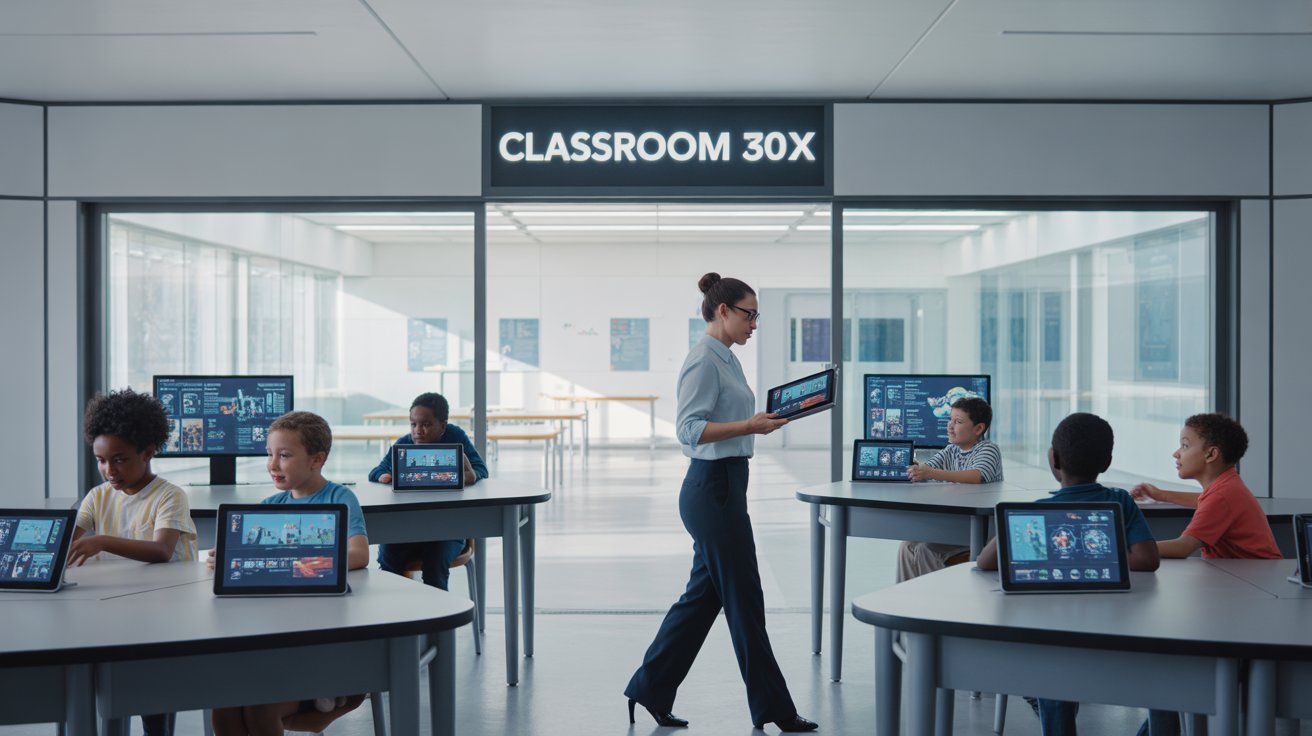
The evolution of education has always been shaped by the need to balance scale with quality. As classrooms grow in size and diversity, traditional teaching methods often struggle to maintain individualized attention and consistent engagement. Within this context, Classroom 30x emerges as a forward-thinking instructional model designed to transform high-density learning environments into highly efficient, student-centered ecosystems.
Rooted in the principles of Efficiency-Based Education, Classroom 30x reimagines how a single educator can effectively guide approximately thirty students without compromising personalization, engagement, or measurable outcomes. By integrating adaptive strategies, collaborative structures, and digital innovation, this model provides a scalable yet deeply human approach to teaching and learning.
Understanding the Core Concept of Classroom 30x
At its foundation, Classroom 30x is not simply about managing a classroom of thirty students—it is about multiplying the effectiveness of teaching practices through structured efficiency.
The “30x” designation reflects a dual meaning:
- A teacher-to-student ratio of 1:30
- A goal of achieving exponentially improved learning outcomes through optimized systems
Rather than relying on traditional lecture-heavy instruction, Classroom 30x embraces a hybrid model that blends guided instruction, peer collaboration, and independent exploration. The classroom becomes a dynamic environment where students are not passive recipients but active participants in their own educational journey.
The Philosophy Behind Efficiency-Based Education
Efficiency-Based Education focuses on maximizing output without sacrificing quality. In Classroom 30x, this philosophy manifests through:
Strategic Resource Allocation
Teachers allocate time, attention, and instructional resources in a way that benefits the entire group while still addressing individual needs.
Structured Autonomy
Students are empowered to take ownership of their learning through guided independence, allowing teachers to focus on targeted interventions.
Continuous Feedback Loops
Learning is constantly assessed and refined using real-time data, ensuring that no student falls behind unnoticed.
Key Components of the Classroom 30x Model
Tiered Workstations
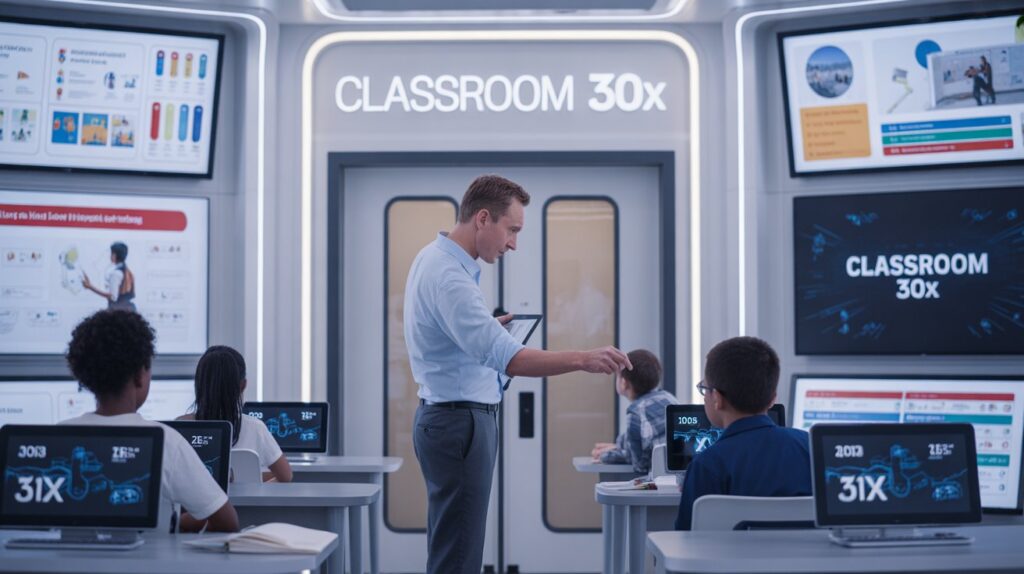
One of the most distinctive features of Classroom 30x is the use of tiered workstations, which divide the classroom into functional zones. Each station serves a specific purpose:
- Instruction Station: Teacher-led sessions for direct instruction
- Collaboration Station: Peer-to-peer learning and group problem-solving
- Independent Learning Station: Self-paced tasks and practice exercises
- Digital Station: Technology-driven modules and assessments
This structure allows multiple learning activities to occur simultaneously, reducing idle time and increasing overall productivity.
Micro-Learning Modules
Micro-learning plays a central role in Classroom 30x. Instead of long lectures, content is delivered in short, focused segments that are easier to digest and retain.
Benefits include:
- Improved attention span
- Faster comprehension
- Flexible pacing for diverse learners
Students can revisit modules as needed, reinforcing understanding without requiring additional teacher intervention.
Universal Design for Learning (UDL)
Classroom 30x incorporates Universal Design for Learning principles to ensure accessibility and inclusivity. This means:
- Multiple ways of presenting information (visual, auditory, interactive)
- Various methods for students to demonstrate understanding
- Flexible pathways tailored to individual learning styles
UDL ensures that every student, regardless of ability or background, can engage meaningfully with the content.
Automated Feedback Systems
Technology enables the rapid collection and analysis of student performance data. Automated systems provide:
- Instant feedback on assignments and quizzes
- Data-driven insights for teachers
- Personalized recommendations for students
This reduces the administrative burden on educators while enhancing the precision of instruction.
Dynamic Student Grouping
Unlike static classroom structures, Classroom 30x emphasizes fluid grouping strategies. Students are grouped based on:
- Skill level
- Learning pace
- Subject-specific needs
Groups are regularly reshuffled using formative assessment data, ensuring that instruction remains relevant and effective.
This approach fosters:
- Peer mentorship
- Collaborative problem-solving
- Balanced classroom dynamics
The Role of the Teacher in Classroom 30x
In this model, the teacher’s role evolves from a traditional lecturer to a learning architect.
Facilitator of Learning
Teachers guide students through structured pathways rather than delivering one-size-fits-all instruction.
Data Analyst
They interpret performance data to identify trends, strengths, and areas for improvement.
Mentor and Coach
Teachers provide targeted support, helping students develop critical thinking and self-regulation skills.
Encouraging Self-Regulation and Accountability
A defining feature of Classroom 30x is its emphasis on student autonomy. Learners are encouraged to:
- Set personal goals
- Monitor their progress
- Reflect on their performance
This not only improves academic outcomes but also prepares students for lifelong learning.
Advantages of Classroom 30x
Scalability
The model can be applied across various educational settings, from primary schools to higher education institutions.
Personalization at Scale
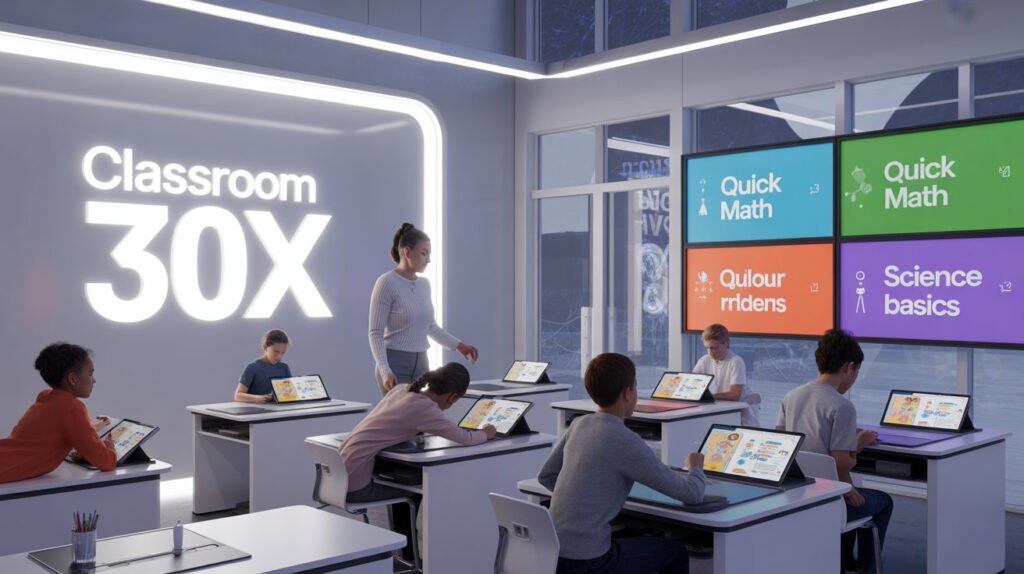
Despite large class sizes, each student receives tailored instruction through adaptive tools and flexible structures.
Increased Engagement
Interactive and varied learning formats keep students actively involved.
Efficient Use of Time
Simultaneous activities ensure that every minute in the classroom is productive.
Challenges and Considerations
While Classroom 30x offers numerous benefits, it also presents challenges that must be addressed:
Implementation Complexity
Setting up tiered workstations and digital systems requires careful planning and resources.
Teacher Training
Educators need specialized training to effectively manage and utilize the model.
Technology Dependence
Reliable access to digital tools is essential for success.
Classroom 30x in Practice
In real-world applications, Classroom 30x transforms the traditional classroom into a high-output learning hub. A typical session might include:
- A small group receiving direct instruction
- Another group collaborating on a project
- Several students working through digital modules
- Continuous assessment happening in the background
This multi-layered approach ensures that learning is constant, varied, and responsive.
Future Implications of Classroom 30x
As education continues to evolve, models like Classroom 30x are likely to play a crucial role in shaping the future of teaching.
Key trends include:
- Greater integration of artificial intelligence for personalized learning
- Expansion of hybrid and blended learning environments
- Increased focus on data-driven decision-making
The model represents a shift toward adaptive, scalable, and student-centered education systems.
Classroom 30x Overview Table (Biography Table)
| Aspect | Details |
|---|---|
| Model Name | Classroom 30x |
| Core Principle | Efficiency-Based Education |
| Typical Ratio | 1 Teacher : 30 Students |
| Key Features | Tiered Workstations, Micro-Learning, Automated Feedback |
| Learning Approach | Hybrid (Teacher-led + Self-paced + Collaborative) |
| Technology Role | Central to feedback, assessment, and content delivery |
| Student Role | Active participant and self-regulated learner |
| Teacher Role | Facilitator, mentor, and data-driven strategist |
| Assessment Style | Continuous and formative |
| Primary Goal | Maximize learning outcomes in high-density environments |
Frequently Asked Questions (FAQs)
What makes Classroom 30x different from traditional teaching models?
Classroom 30x shifts the focus from teacher-centered instruction to a system-driven, student-centered approach. It leverages structured environments, technology, and data to deliver personalized learning at scale.
Can Classroom 30x work without technology?
While some principles can be applied without digital tools, the full effectiveness of Classroom 30x relies heavily on automated feedback systems and digital learning modules.
Is Classroom 30x suitable for all age groups?
Yes, the model is adaptable across different educational levels. However, implementation strategies may vary depending on the age and developmental stage of students.
How does Classroom 30x support struggling students?
Through continuous assessment and dynamic grouping, struggling students receive targeted support and personalized learning pathways, ensuring they are not left behind.
Does this model increase teacher workload?
Initially, implementation may require additional effort. However, over time, automated systems and structured workflows reduce repetitive tasks and improve efficiency.
What skills do students develop in Classroom 30x?
Students gain:
- Critical thinking skills
- Self-regulation abilities
- Collaboration and communication skills
- Digital literacy
A New Perspective on Classroom Excellence
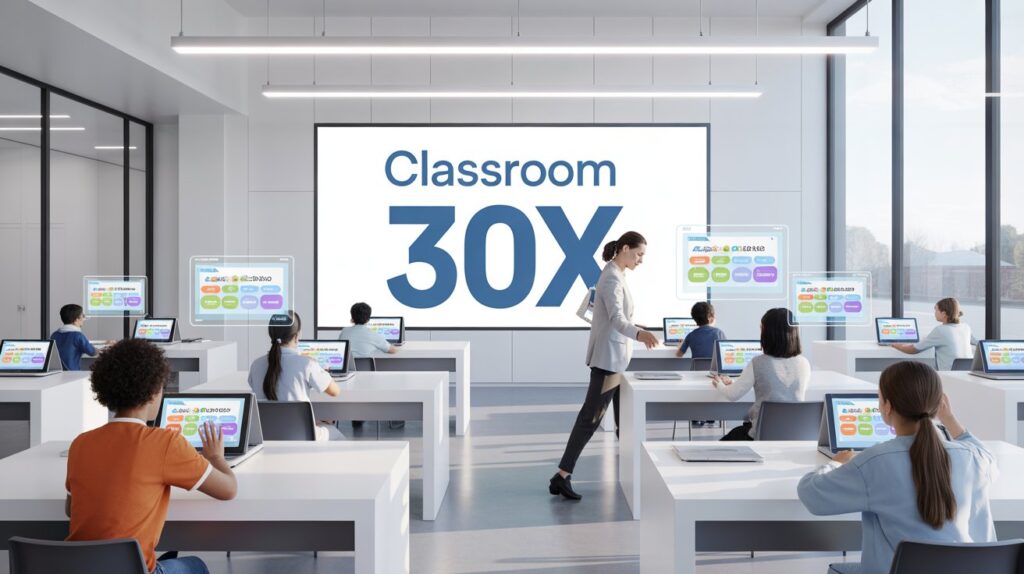
Classroom 30x represents more than just a teaching method—it is a redefinition of educational efficiency and engagement. By harmonizing structure, technology, and human interaction, it creates an environment where both teachers and students can thrive.
Rather than viewing large class sizes as a limitation, this model transforms them into an opportunity for innovation. It demonstrates that with the right systems in place, education can be both scalable and deeply personalized, setting a new standard for learning in the modern era.