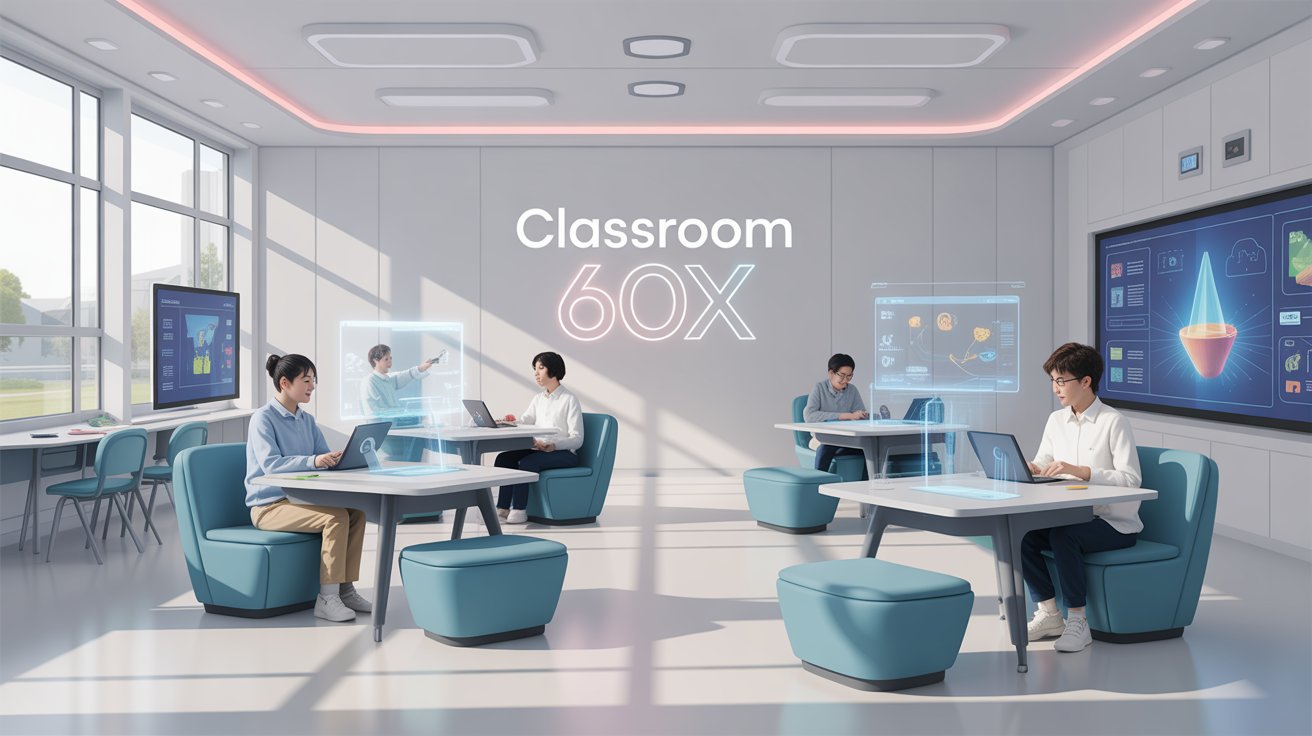
The concept of Classroom 60x represents a transformative shift in how educational spaces are designed, experienced, and optimized for modern learners. As education continues to evolve in response to technological advancements and changing societal needs, the traditional classroom model—rows of desks facing a static board—is being replaced by dynamic, adaptive, and highly interactive environments. Classroom 60x is not merely a physical redesign; it is a comprehensive framework that integrates pedagogy, technology, architecture, and psychology into a unified learning ecosystem.
This article explores the origins, principles, design philosophy, applications, and future potential of Classroom 60x, offering a deep and structured understanding of what makes this concept a cornerstone of next-generation education.
Understanding Classroom 60x
Classroom 60x refers to an advanced educational model that emphasizes 60 times greater engagement, adaptability, and efficiency compared to traditional classrooms. While the “60x” metric is symbolic rather than strictly numerical, it reflects a dramatic enhancement in how students interact with knowledge, teachers, and their environment.
At its core, Classroom 60x is built on three pillars:
- Flexibility of Space
- Integration of Technology
- Student-Centric Learning
These elements work together to create an environment where learning is immersive, personalized, and collaborative.
The Evolution of the Modern Classroom
From Static to Dynamic Learning Spaces
For decades, classrooms were designed with uniformity in mind. Students sat in fixed rows, and teachers delivered lectures from a central point. While effective in certain contexts, this model limited creativity, interaction, and adaptability.
Classroom 60x emerged as a response to these limitations. It incorporates:
- Movable furniture
- Modular layouts
- Multi-functional zones
- Interactive surfaces
This shift allows classrooms to transform instantly based on the learning activity, whether it be group discussions, presentations, or independent study.
The Role of Technology in Transformation
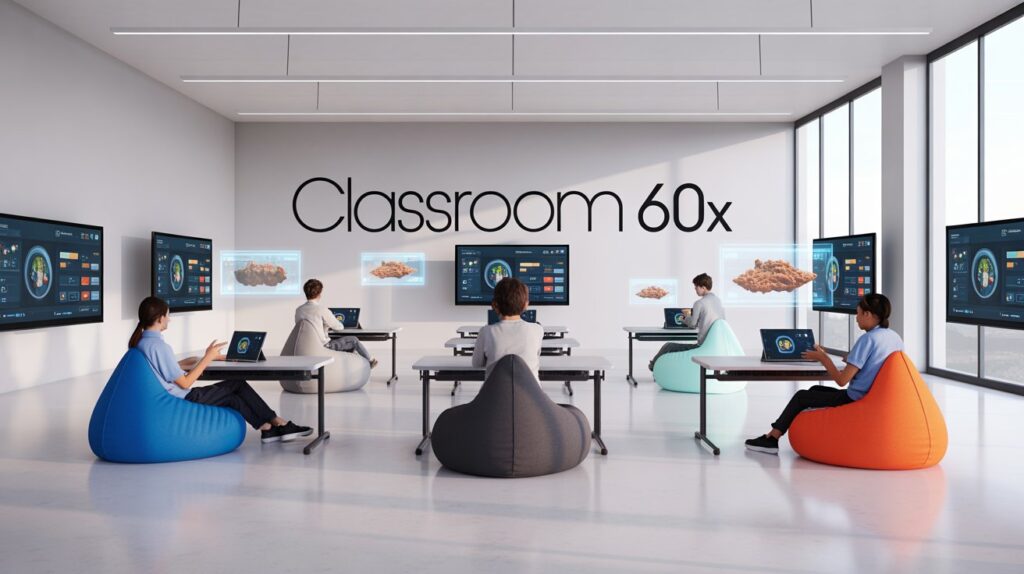
Technology is the backbone of Classroom 60x. It enables:
- Real-time collaboration
- Access to global resources
- Interactive learning tools
- Data-driven instruction
Smart boards, augmented reality tools, and cloud-based platforms are seamlessly integrated into the environment, ensuring that learning extends beyond physical boundaries.
Key Features of Classroom 60x
Adaptive Learning Zones
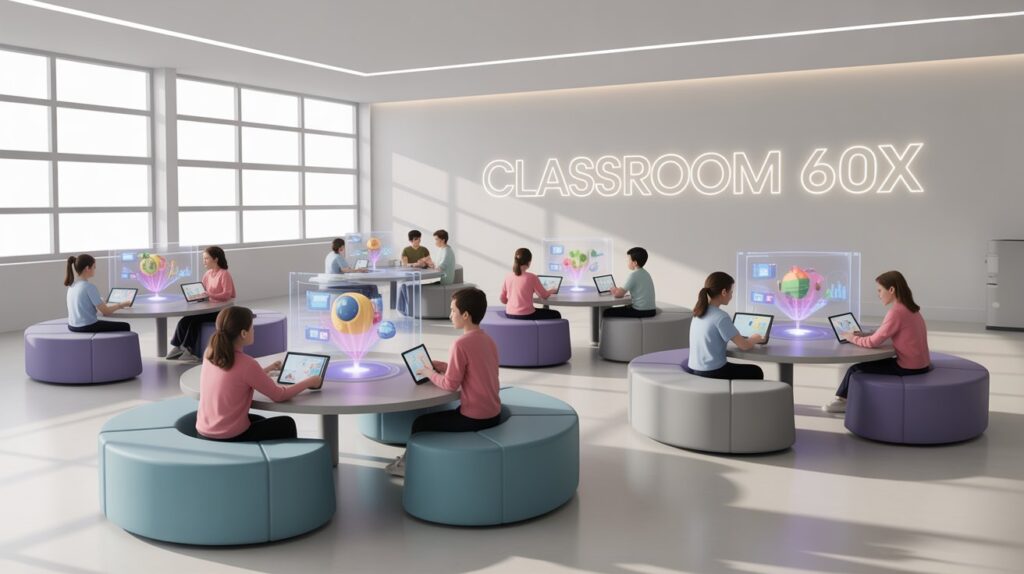
A Classroom 60x environment is divided into distinct zones, each serving a specific purpose:
- Collaboration Zone: Designed for group work and brainstorming
- Focus Zone: Quiet areas for individual concentration
- Presentation Zone: Equipped with advanced display systems
- Exploration Zone: Interactive and experimental learning space
These zones can be reconfigured instantly, allowing educators to tailor the classroom to the lesson.
Intelligent Infrastructure
Modern classrooms are embedded with smart systems that enhance usability and efficiency:
- Automated lighting and temperature control
- Voice-activated tools
- AI-assisted teaching aids
- Real-time performance analytics
This infrastructure reduces administrative burdens and allows teachers to focus on instruction.
Enhanced Student Engagement
One of the most significant advantages of Classroom 60x is its ability to increase engagement. Students are no longer passive recipients of information but active participants in the learning process.
Engagement is fostered through:
- Interactive content
- Gamified learning experiences
- Peer collaboration
- Immediate feedback mechanisms
Pedagogical Foundations
Student-Centered Learning
Classroom 60x prioritizes the needs, interests, and abilities of students. Lessons are designed to be:
- Personalized
- Flexible
- Inclusive
This approach ensures that every student can learn at their own pace while still participating in group activities.
Experiential Learning
Rather than relying solely on theoretical instruction, Classroom 60x emphasizes hands-on experiences. Students learn by:
- Conducting experiments
- Solving real-world problems
- Engaging in simulations
This method enhances understanding and retention.
Collaborative Education
Collaboration is a central theme in Classroom 60x. Students are encouraged to work together, share ideas, and learn from one another. This builds:
- Communication skills
- Teamwork abilities
- Critical thinking
Design Principles of Classroom 60x
Ergonomic and Aesthetic Considerations
The physical design of the classroom plays a crucial role in learning outcomes. Classroom 60x incorporates:
- Ergonomic furniture
- Natural lighting
- Acoustic optimization
- Visually stimulating environments
These elements contribute to comfort, focus, and overall well-being.
Sustainability and Efficiency
Modern classrooms are designed with sustainability in mind. Features include:
- Energy-efficient systems
- Recyclable materials
- Smart resource management
This not only reduces environmental impact but also lowers operational costs.
Applications Across Educational Levels
Primary Education
In early education, Classroom 60x fosters curiosity and exploration. Young learners benefit from:
- Interactive storytelling
- Play-based learning zones
- Sensory engagement tools
Secondary Education
For older students, the focus shifts to critical thinking and skill development. Classroom 60x supports:
- Project-based learning
- Advanced digital tools
- Collaborative research
Higher Education
Universities and colleges utilize Classroom 60x to prepare students for professional environments. Features include:
- Simulation labs
- Virtual collaboration platforms
- Industry-integrated learning modules
Benefits of Classroom 60x
Improved Learning Outcomes
Studies indicate that dynamic and interactive environments significantly enhance comprehension and retention. Classroom 60x achieves this through:
- Active participation
- Immediate feedback
- Multi-sensory engagement
Teacher Empowerment
Educators are equipped with tools that simplify instruction and assessment. This allows them to:
- Focus on teaching
- Customize lessons
- Monitor progress effectively
Future-Ready Skills
Students develop skills that are essential for the modern world, including:
- Digital literacy
- Problem-solving
- Adaptability
- Collaboration
Challenges and Considerations
Implementation Costs
Transforming traditional classrooms into 60x environments requires significant investment in:
- Infrastructure
- Technology
- Training
However, the long-term benefits often outweigh the initial costs.
Training and Adaptation
Teachers must be trained to effectively utilize new tools and methodologies. This involves:
- Professional development programs
- Continuous learning
- Support systems
Accessibility and Equity
Ensuring that all students have equal access to advanced learning environments is a critical challenge. Institutions must address:
- Digital divides
- Resource allocation
- Inclusive design
The Future of Classroom 60x
As technology continues to advance, Classroom 60x is expected to evolve further. Emerging trends include:
- Artificial intelligence-driven personalization
- Virtual and augmented reality integration
- Global classroom connectivity
- Real-time adaptive learning systems
These innovations will continue to redefine how education is delivered and experienced.
Informational Profile: Classroom 60x
| Attribute | Details |
|---|---|
| Concept Name | Classroom 60x |
| Category | Educational Innovation |
| Core Focus | Engagement, Flexibility, Technology Integration |
| Key Features | Adaptive Zones, Smart Infrastructure, Interactive Tools |
| Target Audience | Schools, Colleges, Universities |
| Learning Approach | Student-Centered and Experiential |
| Technology Role | Central and Integrated |
| Benefits | Enhanced Learning, Teacher Efficiency, Future Skills |
| Challenges | Cost, Training, Accessibility |
| Future Scope | AI Integration, Global Learning Networks |
Frequently Asked Questions (FAQs)
What does “60x” mean in Classroom 60x?
The term “60x” symbolizes a significant enhancement in engagement, efficiency, and learning outcomes. It is not a strict measurement but an indicator of transformative improvement.
Is Classroom 60x only about technology?
No, while technology plays a vital role, Classroom 60x also focuses on pedagogy, design, and student experience. It is a holistic approach to education.
Can traditional schools adopt Classroom 60x?
Yes, schools can gradually transition by incorporating flexible furniture, digital tools, and modern teaching methods without a complete overhaul.
How does Classroom 60x benefit teachers?
It provides tools for better lesson planning, real-time assessment, and personalized instruction, making teaching more effective and less time-consuming.
Is Classroom 60x suitable for all age groups?
Absolutely. The model can be adapted for primary, secondary, and higher education, with features tailored to each level.
What are the biggest challenges in implementing Classroom 60x?
The main challenges include cost, teacher training, and ensuring equal access for all students.
A Broader Perspective: Beyond Traditional Learning Boundaries
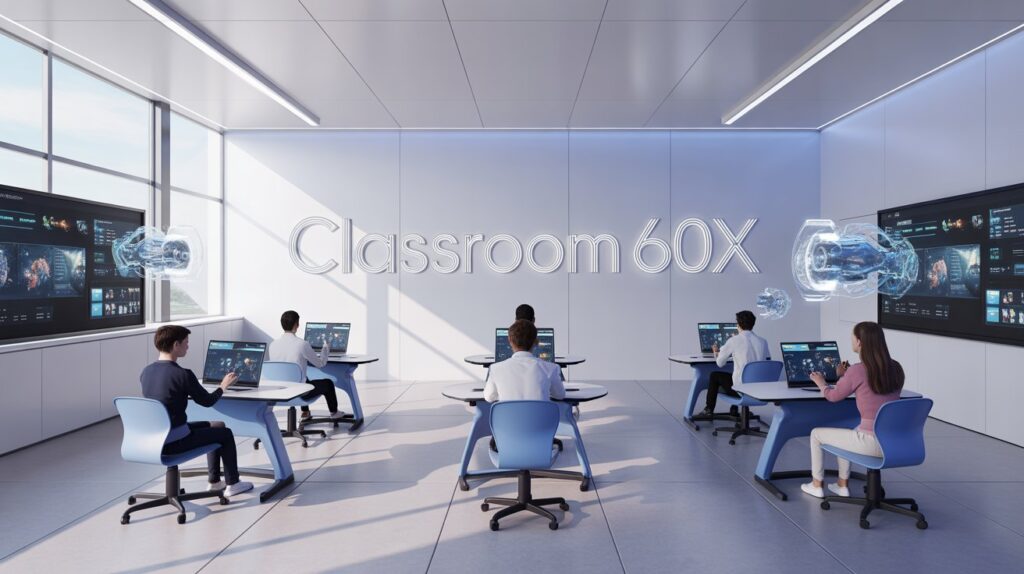
Classroom 60x is not just a trend; it represents a paradigm shift in education. By combining innovation, adaptability, and human-centered design, it creates an environment where learning becomes an engaging, continuous, and meaningful experience.
As institutions around the world explore new ways to educate future generations, Classroom 60x stands as a powerful model—one that aligns with the demands of a rapidly changing world while preserving the fundamental goal of education: to inspire, empower, and transform lives.